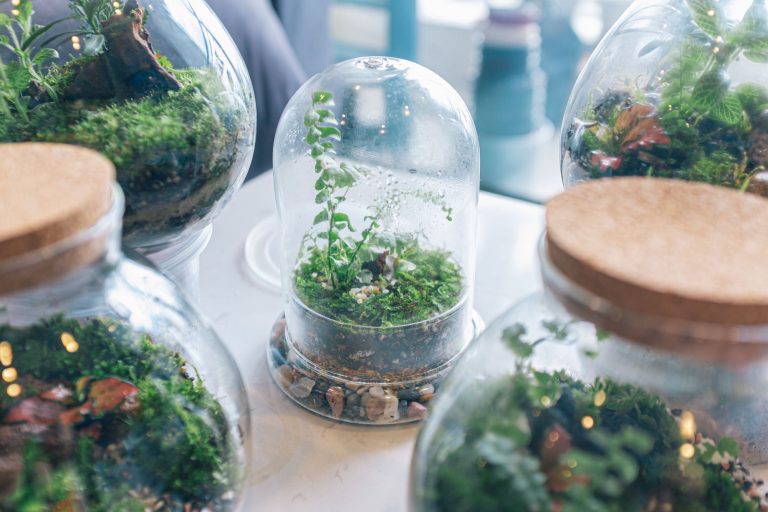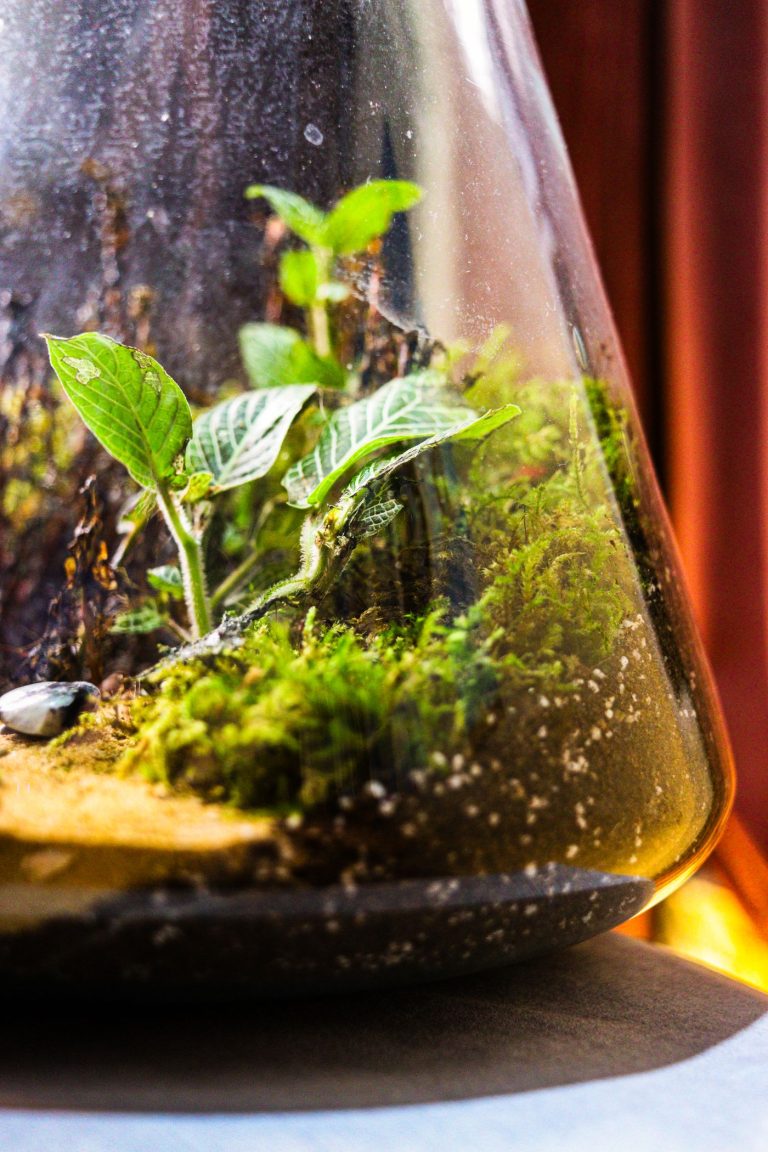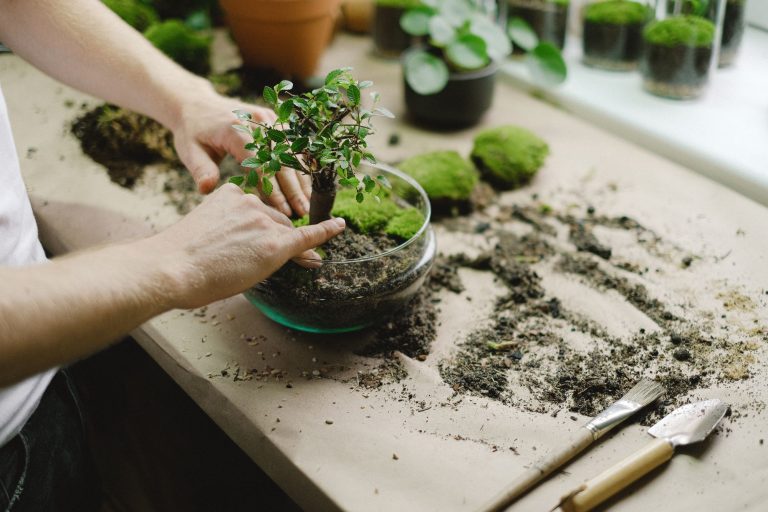
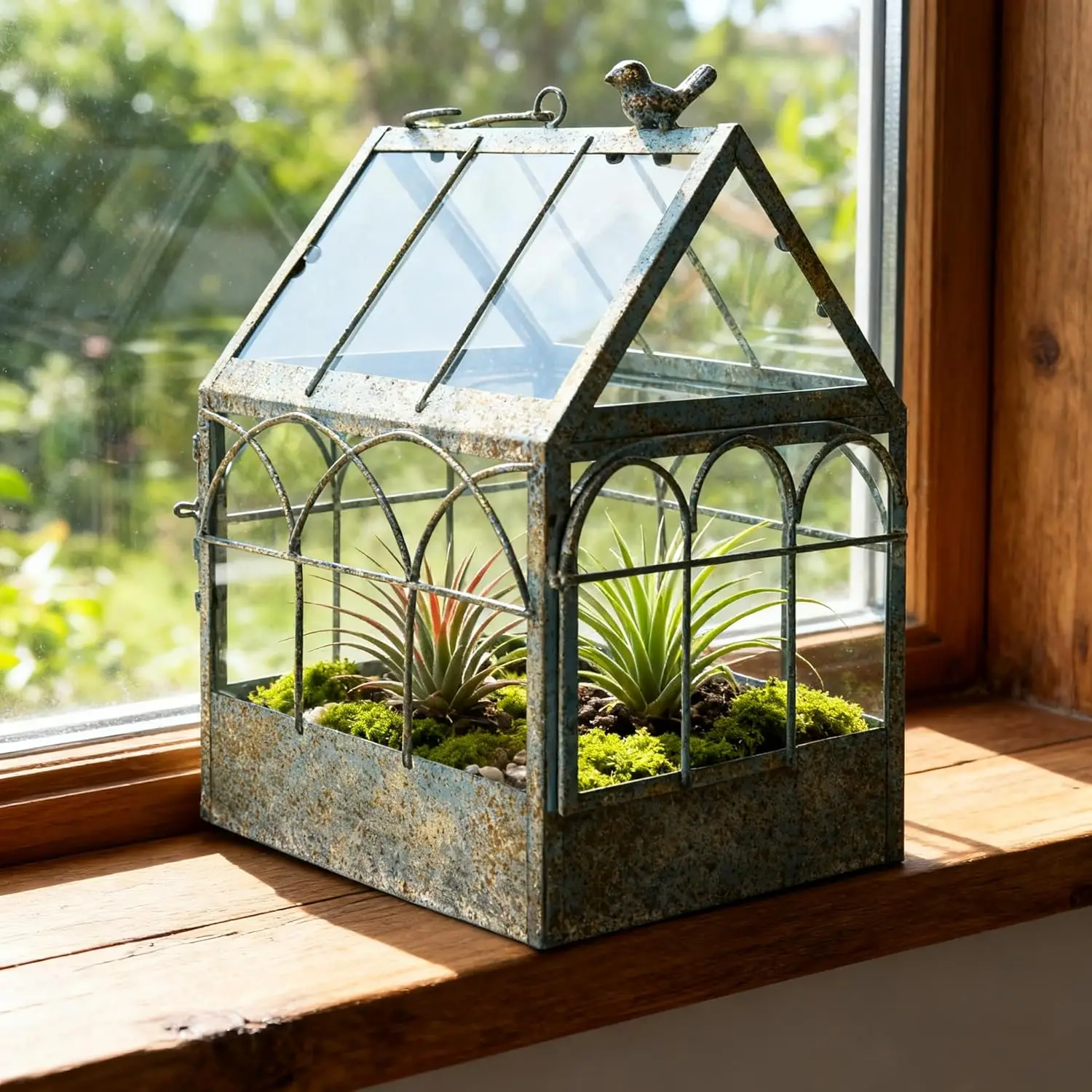
A terrarium is a small world kept under glass, and the vessel you choose shapes everything that happens inside it. A little thought at the start makes planting easier and keeps your plants healthier for years.
Start with the plants, not the glass
The most common mistake is falling for a beautiful vessel first and working out the planting later. It helps to turn that around. Decide roughly what you would like to grow, then choose a container that suits those plants.
Different plants want very different conditions, so a quick sense of your shortlist tells you most of what you need to know:
- Ferns, mosses and selaginella want a humid, sheltered, enclosed space.
- Succulents, cacti and air plants want airflow and drier air.
- Mixed tropical foliage sits in between, and generally prefers steady humidity over dry heat.
Once you know the kind of planting you are drawn to, the rest of the decision becomes much simpler.
Open or closed
This is the first real fork in the road, and it changes how the whole thing behaves. A closed vessel recycles its own moisture and holds humidity, which suits tropical, moisture-loving plants. An open one breathes freely, dries out between waterings and suits plants that dislike damp air.
Closed terrariums forgive forgetful watering. Open ones forgive overwatering. Pick the mistake you are more likely to make, and choose accordingly.
If you are still weighing it up, our guide to open versus closed terrariums walks through the trade-offs in more detail.
Size and proportions
Size affects far more than shelf space. A larger volume of air and substrate is more stable, so temperature and humidity swing less across the day. Small vessels look charming, but they warm up, dry out and drift out of balance faster, so they ask for closer attention.
How much room your plants need
Give your planting a little space to settle and grow into:
- Leave headroom above the tallest plant so foliage is not pressed flat against the glass.
- Allow width for roots to spread rather than circle the base.
- Remember that plants grow. Plant a touch sparsely and let the scene fill in over a few months.
Depth for a healthy base
A terrarium needs room beneath the plants for a drainage layer, a substrate barrier and enough growing medium for roots. A shallow bowl leaves little space for any of that once the plants go in. If you want to picture how the base fits together, our guide to terrarium layers explains each layer and why it is there.
Weight and where it will sit
A planted terrarium is heavier than it looks. Once you add drainage gravel, damp substrate and water, even a modest vessel can become a real lift. Decide where it will live before you plant it, choose a shelf or table that can hold the weight, and try not to move it often. A settled terrarium is a happy one.
Shape and the opening
The shape you can reach into matters as much as the shape you can see. A generous opening makes planting, pruning and the occasional tidy-up far easier. A narrow neck can look elegant, yet it turns every small adjustment into a slow puzzle.
- Wide-mouthed bowls and open geometric vessels are the friendliest to plant and maintain.
- Tall, narrow vessels create height and drama, but expect to use long tools and a patient hand.
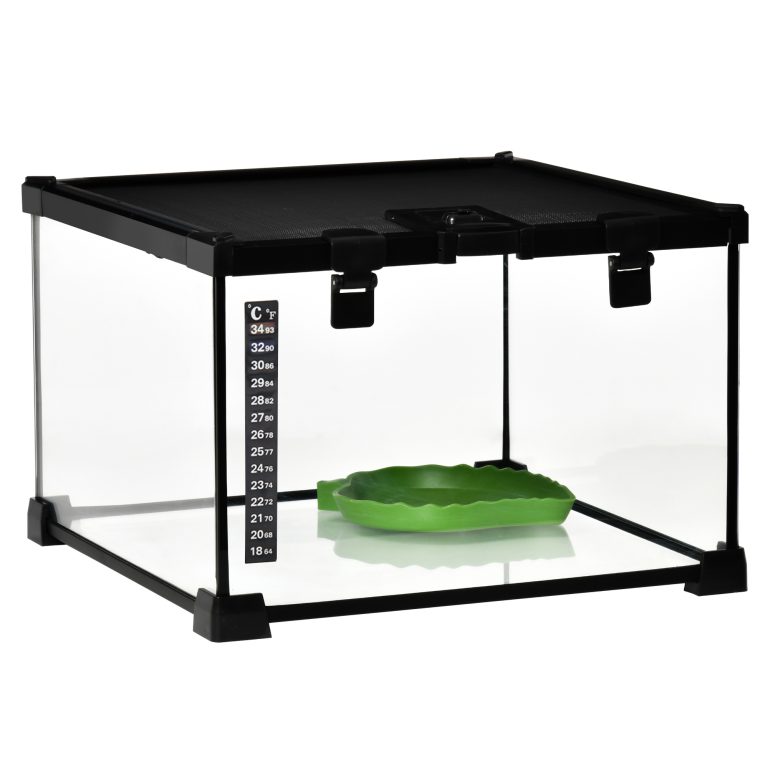
- Hinged or lift-off lids give you easy access for watering and pruning without disturbing the scene.
If this is your first build, favour access over difficulty. You will be grateful for it at the first trim.
Material and style
Most terrariums are glass, which lets in the light plants need and shows off the layers you build. Beyond that, style is mostly about how you want the piece to sit in a room.
- Clear-panelled vessels feel bright and modern and reveal every detail of the planting.
- Geometric and leaded frames add structure and a quiet, period character.
- Metal-framed glasshouses carry a classic, botanical look that suits a country or vintage interior.
Whatever the frame, clear glass on the growing sides is what counts. Heavily coloured or frosted panels cut the light reaching your plants, so keep any tinting to the base or trim rather than the panels the plants sit behind. You can compare shapes and finishes across our Glass and Vessels collection.
Matching the vessel to your space
Where a terrarium will live should guide the vessel you pick. Bright, indirect light suits almost every planted terrarium, while direct sun can overheat a closed one surprisingly quickly.
- A bright room out of direct sun suits nearly any style you like.
- A dim corner is usually better served by a small grow light than by a larger vessel.
- A busy shelf or a home with pets suits an enclosed vessel that shrugs off knocks and dust.
For more on reading the light in a room before you commit, see our guide to light and placement.
A simple way to decide
Narrow it down in order and the right vessel tends to reveal itself. Working through the questions one at a time keeps you from being swayed by looks alone:
- What do you want to grow, and does it prefer humid or dry air?
- Does that point you to a closed vessel or an open one?
- Is there enough volume and depth for the plants, the base and some growing room?
- Can you comfortably reach inside to plant and tidy it?
- Does the style suit the spot you have in mind, and its light?
For a first tropical planting, a closed vessel with a wide opening and a little depth gives you room to work and a stable climate to grow into. A clear, roomy shape makes the early weeks forgiving while you find your rhythm with watering and light.
When you are ready, take your time browsing the range and picture the planting before the glass. The best terrarium is the one you will enjoy tending, not simply the one that looks handsome empty on a shelf.