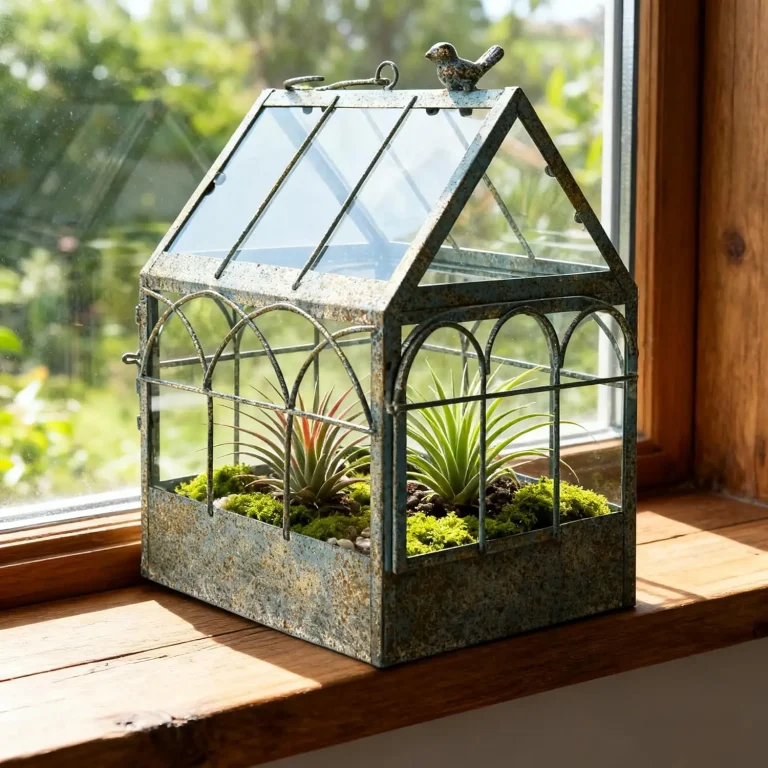
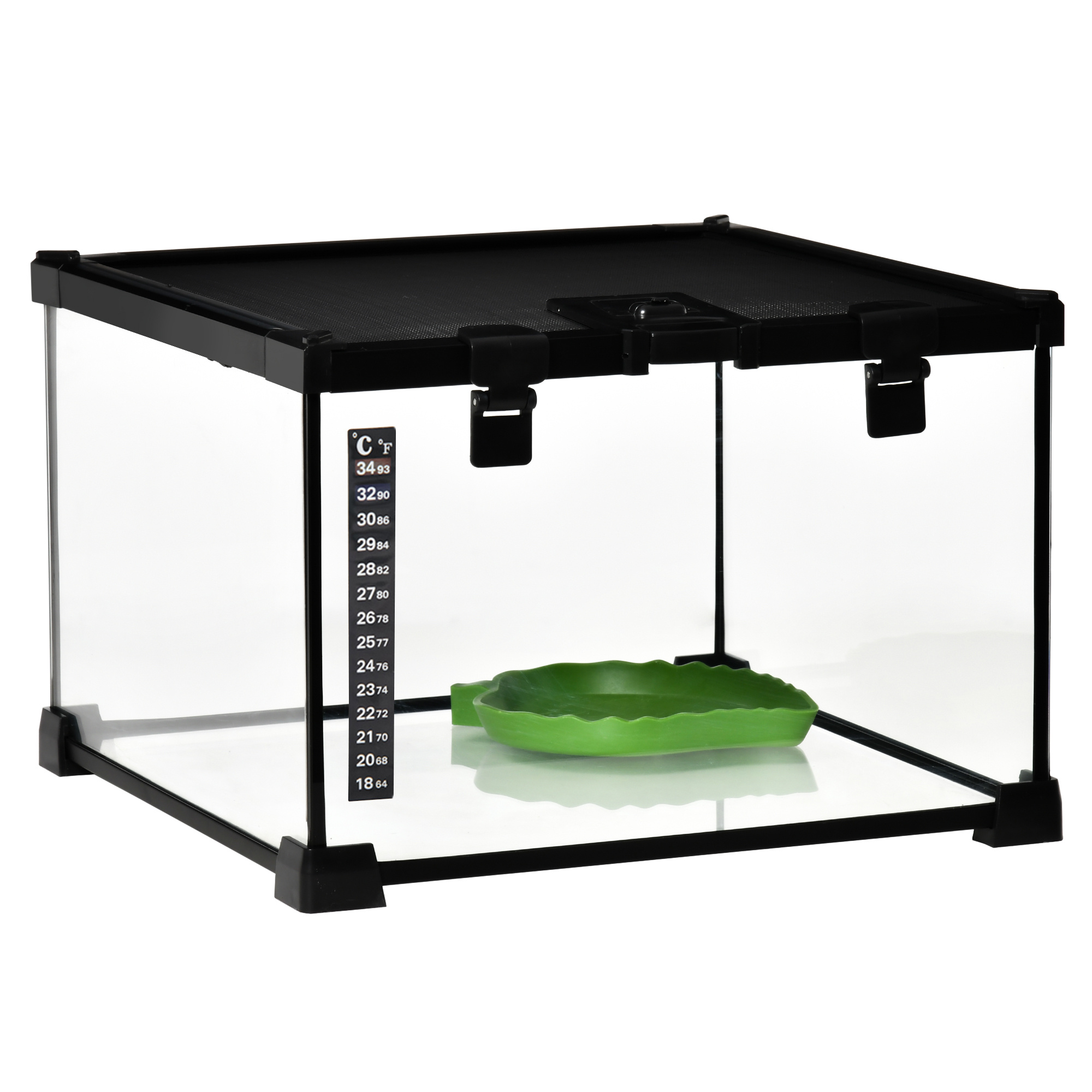
A newly built terrarium is not quite finished on the day you plant it. The weeks that follow are when it quietly becomes a living system, and knowing what to expect turns worry into calm.
What “establishing” really means
When people talk about a bioactive terrarium settling in, they mean the stretch of time after the build when plants root, moss recovers, and a cleanup crew of springtails and isopods spreads through the substrate. During this period the small world inside the glass finds its balance.
It is normal for things to look a little unsettled at first. Give it a few weeks and the system begins to regulate itself, which is the whole point of building bioactive in the first place.
The first week: plant, water, and observe
The opening days are about gentle conditions and patience. Your plants and moss have just been handled and moved, so the priority is steady light, comfortable warmth, and a substrate that is damp rather than wet.
Light, warmth and water
- Place it in bright, indirect light. A spot near a window that never catches direct sun is ideal, since direct sun quickly overheats a closed terrarium.
- Keep normal room temperature, roughly 18 to 24 C. Most tropical plants and a cleanup crew are comfortable in that range.
- Mist lightly only if the surface looks dry. The substrate should feel like a wrung-out sponge, never sodden.
- For a closed setup, expect the glass to fog and clear through the day while the moisture balance finds its rhythm.
A gentle hand
It is tempting to keep adjusting a fresh build. Try not to. Every time you open the lid, rearrange moss, or top up the water, you reset the clock on it settling. Let the plants show you how they are doing over the first week before you change anything.
Weeks one to four: what is normal
This is the stage where new keepers most often panic, usually without cause. Here is what tends to happen, and what it actually means.
Early mould is usually a good sign
A bloom of white, fuzzy mould on wood or leaf litter in the first couple of weeks is common and rarely a problem. It feeds on the sugars in fresh organic material, and it is exactly what your cleanup crew is there to eat.
White fuzzy mould in a young terrarium is food for your springtails, not a crisis. Give the crew a little time before you reach for anything else.
If mould spreads heavily or turns slimy, improve airflow by propping the lid open for a few hours and lift out the worst-affected debris. Our guide to mould, fog and pests covers the less common cases in more detail.
Condensation finds its rhythm
Early on, a closed terrarium may fog heavily or unevenly. As the plants root and the moisture settles, you should see a daily cycle: misted glass in the cooler hours, clearing as the room warms. Constant, total fog usually points to slightly too much water, so leave the lid ajar until it eases.
Some leaf drop is normal
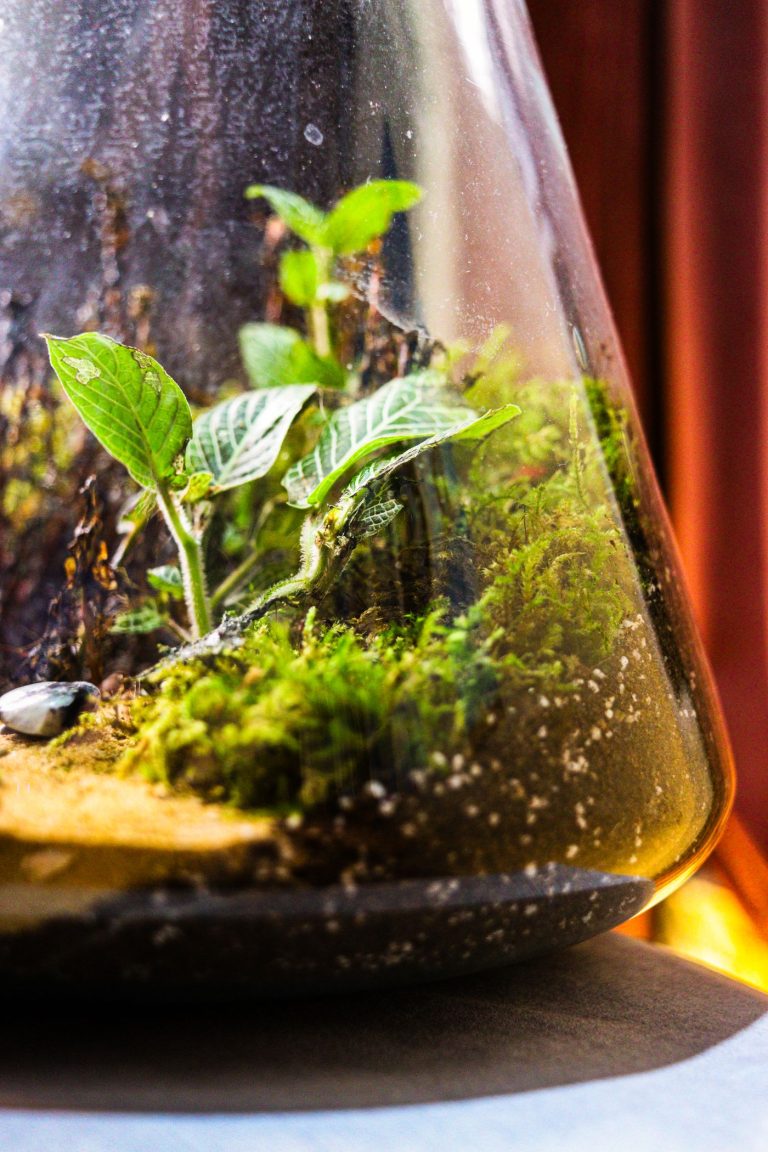
Plants that have just moved into a warm, humid, enclosed space often shed a few older leaves as they adjust. A little yellowing or the odd dropped leaf in the first weeks is acclimation, not decline. The signal that matters is new growth from the centre or tips, which tells you the plant has taken to its new home.
Pinch off any fully browned leaves so they do not add to the debris while the crew is still building up. If a plant is losing most of its foliage, check that it is not sitting in direct sun or standing water, the two most common causes.
The cleanup crew wakes up
Springtails multiply quickly, and you may spot tiny pale specks moving across the glass or soil within a couple of weeks. Isopods are slower and more private, and a full population can take a couple of months to build. Both are quietly recycling waste and keeping mould in check. You can read more about springtails and isopods and the work they do.
Glass Wild does not ship live cultures. The illustrated guide in each kit shows how to source a small starter culture locally so you can get things moving.
Feeding and tending a young system
A bioactive terrarium needs very little, but a young one benefits from a small amount of food for the crew while the plants are still filling in.
- Add a thin layer of dried leaf litter if you have not already. It shelters the crew and feeds them slowly.
- A pinch of fish flake or a small piece of vegetable now and then gives isopods a boost. Remove anything left uneaten after a day or two.
- Keep misting light and occasional rather than heavy and frequent.
- Skip fertiliser. A bioactive system is built to recycle its own nutrients as the crew breaks down waste.
How to tell it has settled in
There is no exact day, but a handful of signs together tell you the system has found its feet, usually somewhere between four and eight weeks.
- Plants are holding firm and pushing new growth rather than dropping leaves.
- Moss looks green and plump rather than brown or shrunken.
- Condensation follows a gentle daily cycle instead of sitting as heavy fog.
- You can see springtails on the glass or soil, and the early mould blooms have faded.
- Nothing smells sour when you lift the lid. A healthy terrarium smells of clean, damp soil.
Once you reach that point, the terrarium is largely self sustaining. From here it asks for little more than the occasional glass wipe and a light misting when the substrate dries. Our long-term care routine covers the simple rhythm that follows.
A few weeks of patience
The kindest thing you can do for a new bioactive terrarium is to watch it more than you touch it. Give the plants, the moss, and the cleanup crew a little time, and the balance you built will hold on its own.
If you are planning a first build, the Glasshouse bioactive tank comes with an illustrated step-by-step guide and a build video to help you get the foundations right from the start.