A terrarium is a small living world, and like any living thing it sometimes sends signals that something is off. White fuzz on a piece of wood, glass you can no longer see through, a few tiny insects drifting about: none of these mean you have failed, and almost all of them are easy to read and put right once you know what you are looking at.
Read the problem before you act
The most common mistake is reaching for a fix before understanding the cause. A bioactive terrarium is a balance of moisture, air, light and life, and most problems are simply that balance drifting in one direction.
Before you change anything, take a slow look and ask three quiet questions:
- Is the substrate soaking wet, pleasantly damp, or drying out?
- Does the glass clear at any point during the day, or stay fogged constantly?
- Has anything new gone in recently, such as a plant, leaf litter or wood?
Those answers will point you toward the right section below far more reliably than guessing.
Mould and white fuzz
Soft white or grey fuzz, usually on wood, leaf litter or the surface of the soil, is the problem people worry about most. In a young bioactive setup it is also the most normal. It is rarely a sign of failure.
Why it appears
New hardscape and fresh substrate carry natural spores. In the warm, still, humid air of a sealed terrarium those spores feed on exposed organic matter, which is why a new build often blooms in its first few weeks. It almost always settles on its own as the system matures.
How to clear it
- Wipe small patches away gently with a cotton bud or a clean, slightly damp cloth.
- Lift the lid for an hour or two each day for a week to bring in fresh air and lower humidity slightly.
- Make sure a healthy cleanup crew of springtails and isopods is established, as they graze on mould and are your best long-term defence.
- Resist the urge to use household antifungal sprays, which harm the microfauna and plants you are trying to protect.
A little early mould is the terrarium finding its feet. Give it airflow, a cleanup crew and a week or two of patience before you intervene further.
Condensation and foggy glass
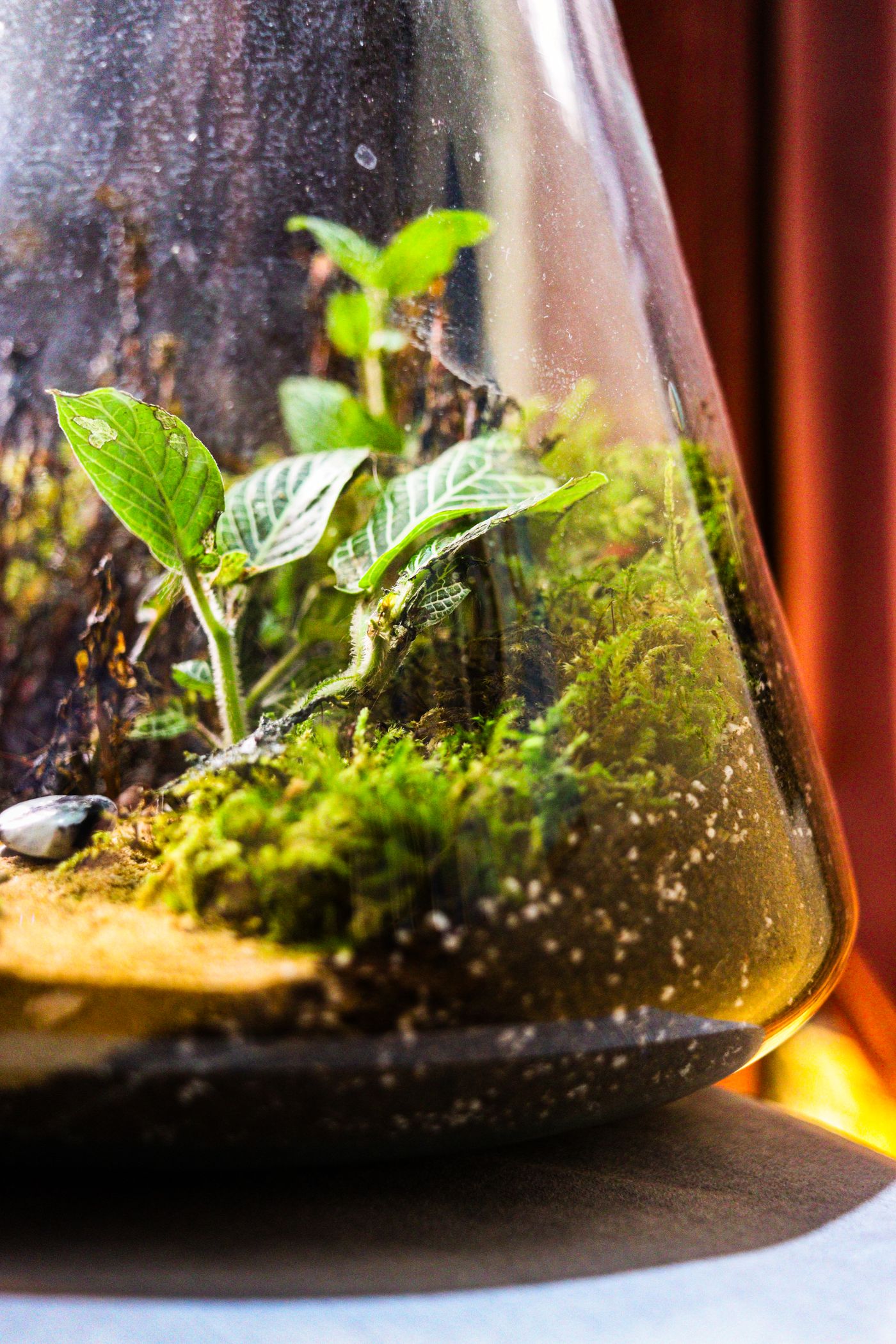
Some condensation is the sign of a healthy, breathing terrarium. The water cycle you can see on the glass is exactly what keeps the plants inside watered. The problem is only when the glass is so fogged that you cannot see in, or so dry that the plants are wilting.
When there is too much moisture
Heavy, permanent fog and droplets running down the glass usually mean the substrate is holding more water than the plants can use. To bring it back into balance:
- Open the lid for a few hours to let excess moisture escape, and repeat daily until the glass clears for part of the day.
- Hold off on watering until the substrate is merely damp rather than wet.
- Check the drainage layer is doing its job and that water is not pooling at the base.
When there is too little
If the glass is bone dry, the leaves look crisp at the edges and moss is browning, the air is too dry. A light, even misting restores the humidity these plants expect. A fine sprayer such as The Mister lets you add moisture gradually without flooding the substrate, which is far safer than a heavy pour.
Aim for a rhythm where the glass mists over and then clears again across the day. That gentle daily cycle is the goal.
Pests and unwanted visitors
Most small creatures that appear in a terrarium arrive on plants or leaf litter. A few are harmless or even helpful, but a couple are worth managing before they multiply.
Fungus gnats
These small dark flies hover around damp soil, and their larvae live in the top layer of wet substrate. They are more nuisance than danger, and they thrive on the same excess moisture that encourages mould.
- Let the surface of the substrate dry slightly between waterings, as gnats need it consistently wet to breed.
- Increase airflow with the lid for short periods each day.
- A sticky yellow trap placed nearby catches the adults while the population settles.
Mites and other hitchhikers
Tiny pale mites are common and usually feed on decaying matter rather than your plants, much like your cleanup crew. A balanced terrarium keeps their numbers in check on its own. If you ever spot something clearly chewing live foliage, remove the affected leaf and quarantine any new plant before it joins an established setup.
Yellowing, browning and tired plants
When plants rather than the environment look wrong, the cause is usually light or water rather than disease.
- Yellowing lower leaves often point to overwatering and roots sitting in moisture for too long.
- Pale, stretched growth means the terrarium is reaching for more light. Our guide to light and placement covers how to find the right spot.
- Crisp brown edges suggest the air is too dry, or that direct sun is scorching leaves through the glass.
Change one thing at a time and give the terrarium a week to respond before adjusting again. Living systems move slowly, and stacking changes makes the real cause impossible to see.
Building problems out from the start
The easiest problems to solve are the ones that never take hold. A few habits prevent most of the trouble above:
- Use a proper drainage layer so water never sits around the roots.
- Establish your cleanup crew early so mould and debris are managed from day one.
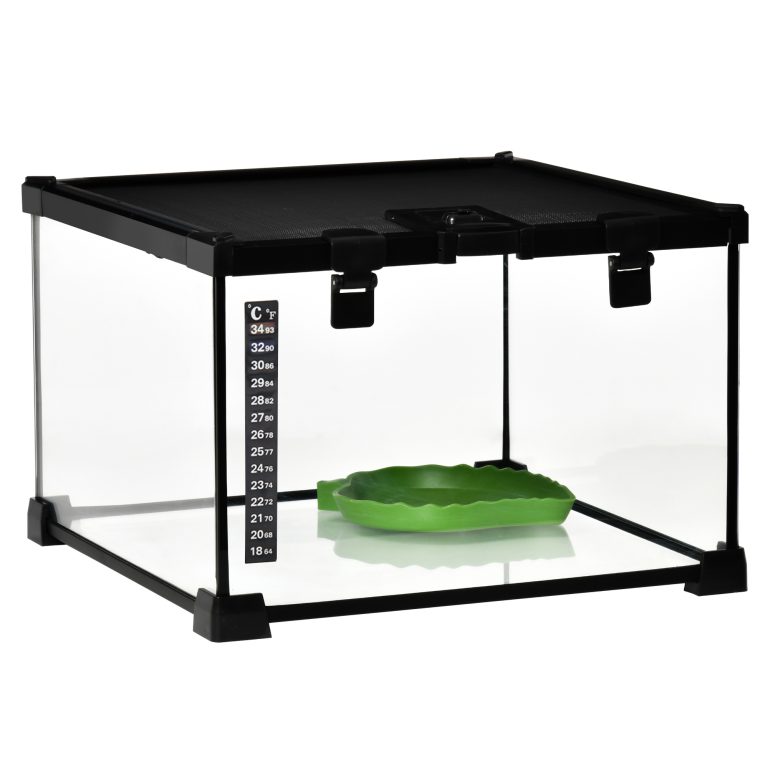
- Choose a vessel sized to the plants, with room for air to move and growth to happen. A well made enclosure like The Glasshouse Bioactive Terrarium Tank makes airflow and humidity far easier to manage.
- Quarantine new plants briefly before adding them to an established terrarium.
When in doubt, slow down
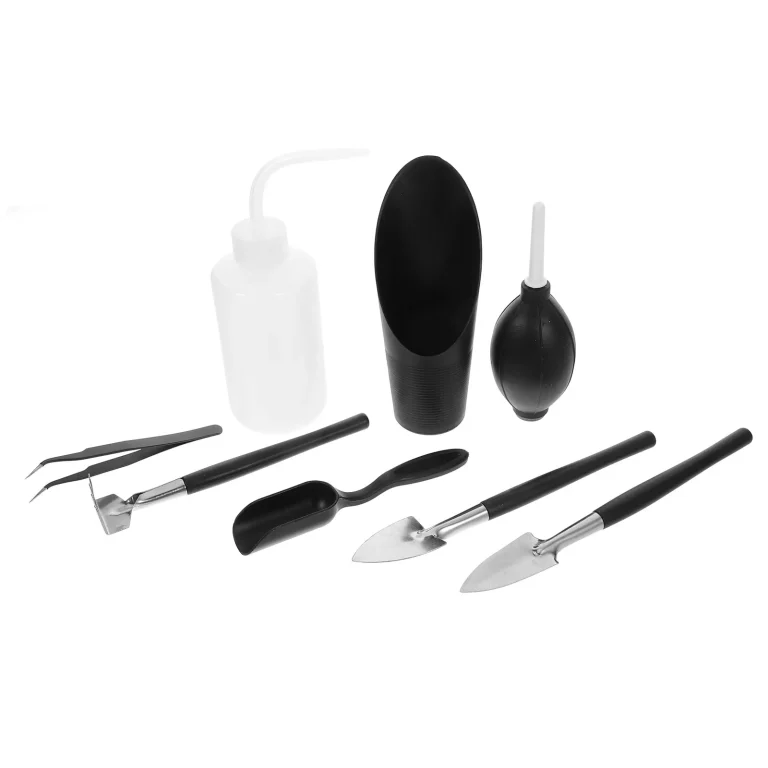
Nearly every terrarium problem is a quiet request for a little more air, a little less water, or a little more time. Read the signal, make one small change, and let the small world settle. If you would like a setup that makes that balance simple to hold, our terrariums and tools are made to give your plants and cleanup crew the steady conditions they thrive in.