One of the first choices in terrarium keeping is also one of the most important: should your little world be sealed under glass, or left open to the air? The answer shapes which plants will thrive, how often you tend it and where it can live.
The basic difference
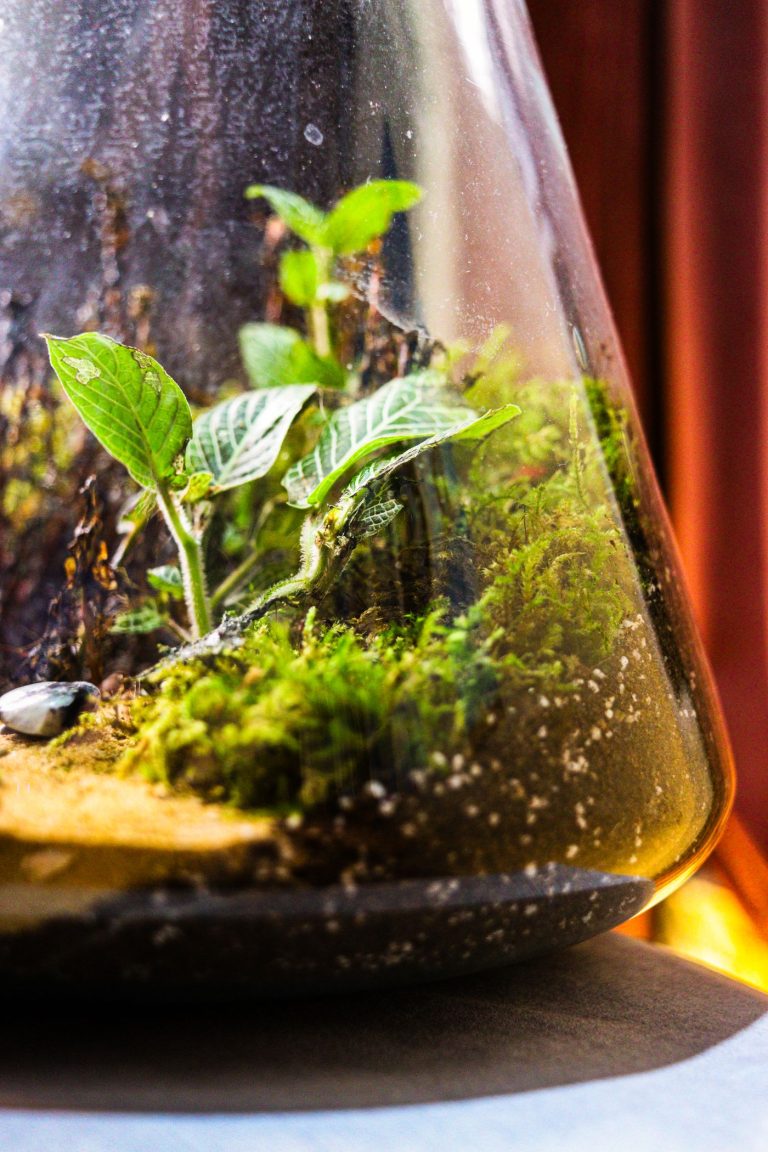
A closed terrarium has a lid or narrow opening that traps moisture inside. Water evaporates, gathers on the glass and runs back down to the soil, so the same small amount of moisture cycles round and round. This makes a warm, humid pocket that suits tropical plants.
An open terrarium has no lid, or a wide mouth that lets air move freely. Moisture escapes rather than building up, so the inside stays drier and closer to the room around it. This suits plants that prefer airy, well-drained conditions.
The simplest way to decide is to match the vessel to the plants you love, not the other way around. Humidity-loving ferns and moss want a lid. Succulents and cacti want air.
Closed terrariums: humid worlds under glass
A closed terrarium is the classic green, mossy scene with a soft mist on the inside of the glass. Once it settles, it needs very little watering, because the water it has keeps recycling rather than drying out.
These setups are well suited to plants from damp, shaded forest floors. Good choices include:
- Mosses of most kinds, which love steady humidity
- Ferns such as button fern and small maidenhair
- Fittonia (nerve plant), with its bright veined leaves
- Pilea, peperomia and baby’s tears for low, spreading cover
- Selaginella, a soft moss-like spreader that enjoys moisture
A closed terrarium is also where a bioactive approach shines. With a drainage layer below the soil and a small cleanup crew of springtails and isopods living in it, fallen leaves and surface mould get broken down naturally, so the scene stays largely self sustaining. If that idea is new to you, our guide to springtails and isopods as a cleanup crew walks through how it works.
Caring for a closed terrarium
- Give it bright, indirect light. Direct sun turns a sealed jar into an oven and cooks the plants.
- Water sparingly. Most need only a light top-up every few weeks, if that.
- If the glass is so foggy you cannot see in, take the lid off for a few hours to let some moisture out, then close it again.
- Wipe the inside of the glass now and then so you can enjoy the view.
The condensation itself is a useful gauge. A light, even misting that clears through the day usually means the balance is right. Heavy droplets that run constantly and never clear suggest too much water, so vent it for a while. Glass that stays completely dry and clear is a sign the soil may have dried out and could want a small drink.
Open terrariums: airy homes for hardy plants
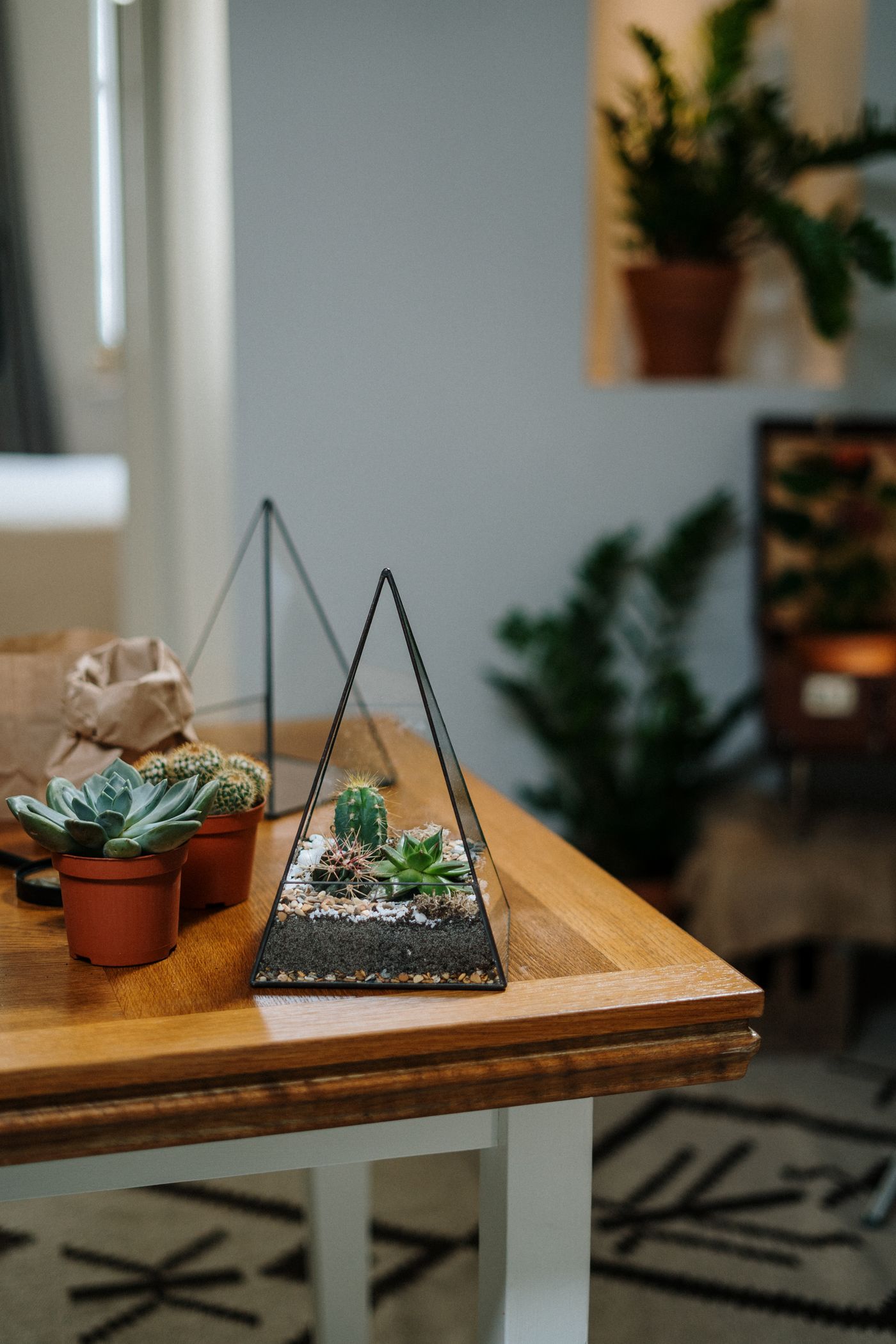
An open terrarium swaps humidity for airflow. Without a lid the inside dries between waterings, which is exactly what drought-tolerant plants want. These are bright, sculptural pieces that feel at home on a sunny shelf or table.
Plants that do well in an open setting include:
- Succulents in their many shapes and colours
- Cacti, which want sharp drainage and plenty of light
- Air plants (tillandsia), which need no soil at all
- Haworthia and echeveria for neat, slow-growing rosettes
Geometric and faceted vessels are a natural fit here, since the open structure keeps air moving around the plants. Pieces like The Facet geometric terrarium are designed for exactly this kind of dry, well-lit planting.
Caring for an open terrarium
- Place it somewhere bright. Most succulents and cacti want several hours of good light a day.
- Let the soil dry out between waterings, then water a little at the roots rather than over the leaves.
- Use a free-draining, gritty mix so water never sits at the bottom.
- Resist mixing thirsty tropical plants with succulents. Their needs pull in opposite directions.
Because there is no reservoir of trapped moisture, watering matters more here than in a sealed setup. The most common mistake is kindness: too much water with nowhere to drain leads to soft, rotting roots. Most open terrariums also slow down in winter, when shorter days mean the plants drink far less, so ease off through the colder months.
A quick side-by-side
If you prefer to see it at a glance, here is how the two compare on the things that tend to matter most.
- Humidity: closed stays high and stable; open stays low and close to the room.
- Best plants: closed for ferns, moss and tropicals; open for succulents, cacti and air plants.
- Light: closed wants bright but indirect; open is happy in genuine sun.
- Watering: closed rarely; open on a regular, light rhythm.
- Overall feel: closed is lush and forest-like; open is sculptural and airy.
How to choose the one that suits you
There is no better or worse here, only what fits your plants, your space and the kind of care you enjoy. Run through these three questions.
- Which plants do you want? Lush, green and mossy points to closed. Sculptural succulents and cacti point to open.
- What light do you have? A bright spot out of direct sun suits a closed terrarium. A genuinely sunny sill suits an open one.
- How hands-on do you want to be? A settled closed terrarium asks for very little. An open one needs a more regular, if simple, watering rhythm.
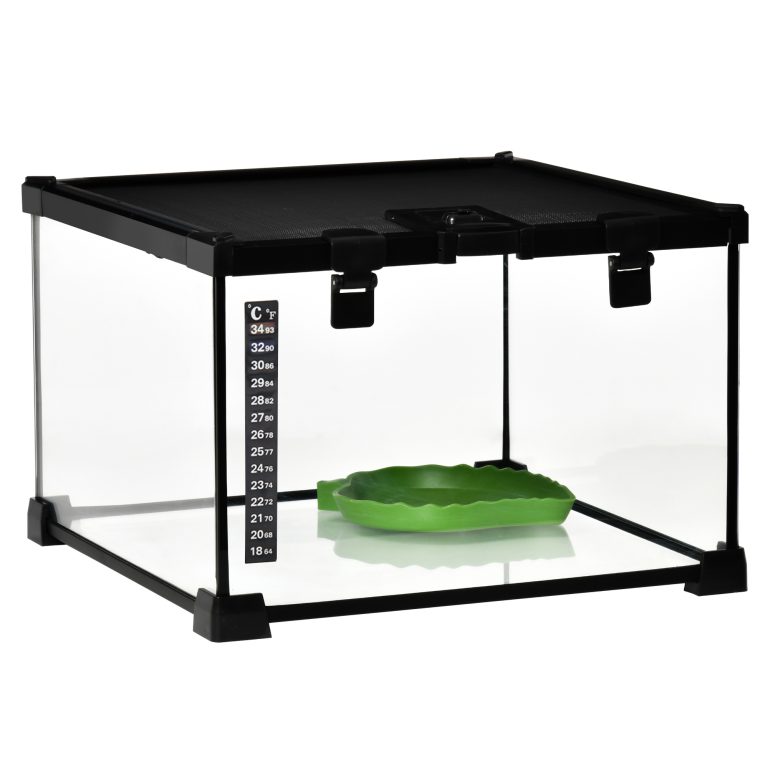
If you are still finding your feet, a closed setup is often the gentler place to start, since it forgives the odd missed watering. A larger sealed tank such as The Glasshouse Mini bioactive tank gives a stable, roomy world for tropical plants and a cleanup crew to settle into.
Either way, the build is the same idea
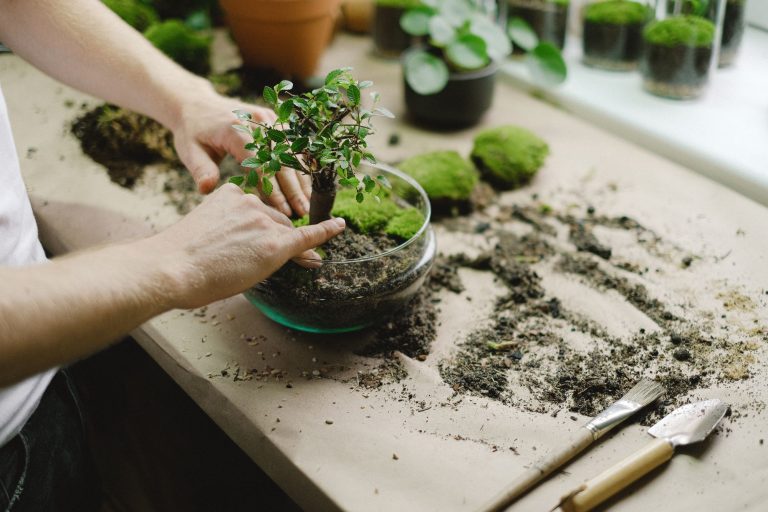
Whichever you choose, the foundations rhyme: a drainage layer, a barrier, the right soil for your plants, then planting and a final tidy. The plants and the lid change, but the method does not. Our step-by-step build guide takes you through it from empty glass to finished scene.
Take a moment to picture where your terrarium will live and which plants make you happiest to look at. Let that lead the choice, and the right vessel tends to become obvious. When you are ready, our collection has open and closed pieces in a range of sizes, so there is room for whatever you want to grow.