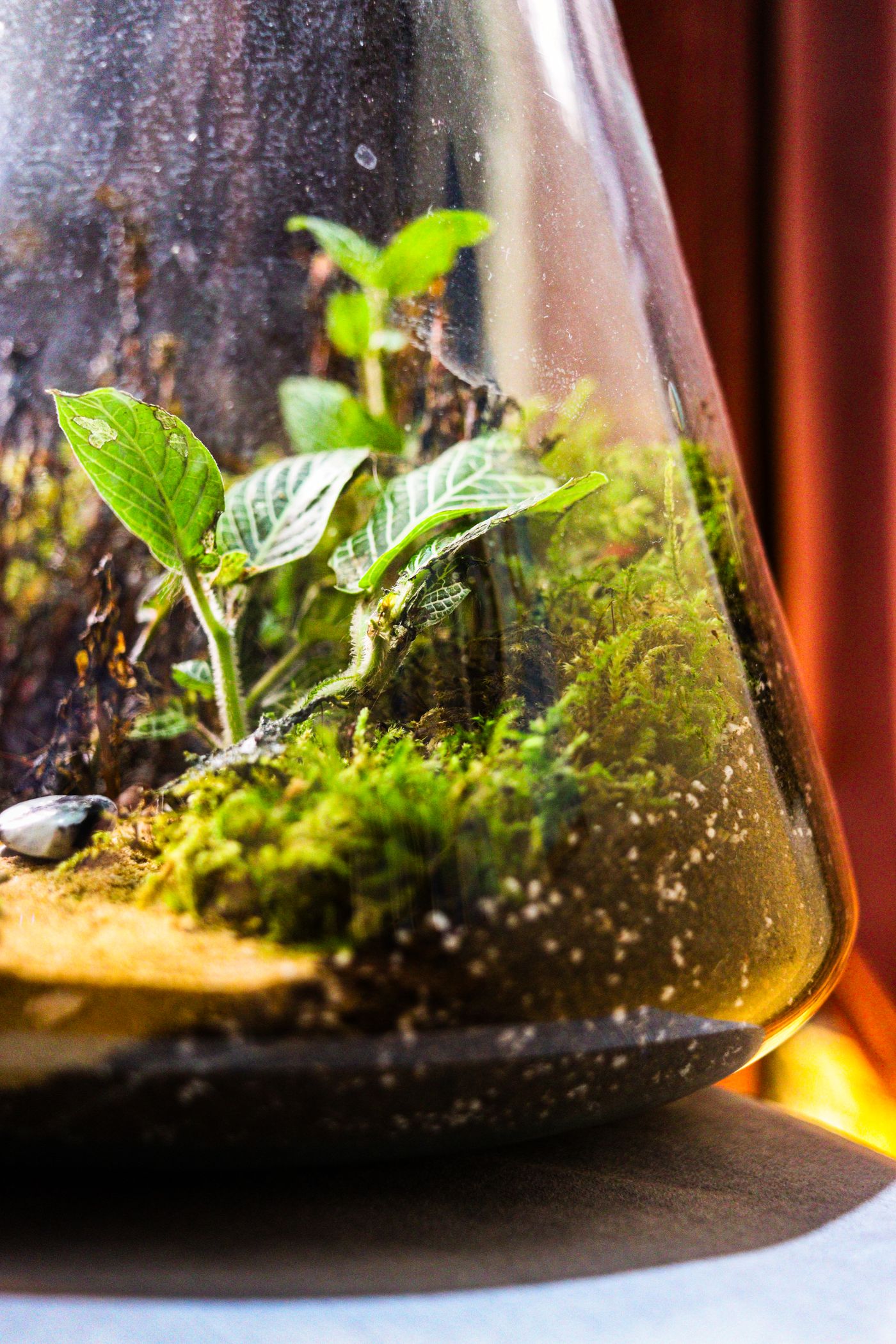
A closed terrarium is a small, humid world under glass, and the plants you put inside it decide whether it thrives or slowly struggles. The best choices love warmth and moisture, stay compact, and grow slowly enough to leave room for the scene to fill in.
What makes a plant right for a closed terrarium
Inside a sealed container the air stays warm and very humid, moisture recycles between the soil and the glass, and light is gentle rather than direct. Plants that come from tropical forest floors feel at home here. Desert and succulent plants do not.
The same conditions that suit these plants also suit a bioactive setup, where a living cleanup crew and a healthy layer of soil keep the whole thing balanced. Choosing the right plants is the first step toward a terrarium that mostly runs itself.
When you are weighing up a plant, look for a few simple things:
- It enjoys high humidity and consistently damp soil.
- It is happy in bright, indirect light rather than full sun.
- It stays naturally small, or grows slowly enough to prune.
- It has soft, leafy growth rather than thick succulent leaves.
The golden rule is to choose plants that love humidity and stay small. Almost every other decision follows from that one.
The best plants for a closed terrarium
These are the reliable performers, the ones that settle in quickly and forgive a beginner’s early mistakes. Mix a few together for contrast in colour, height, and leaf shape.
Foliage for colour and form
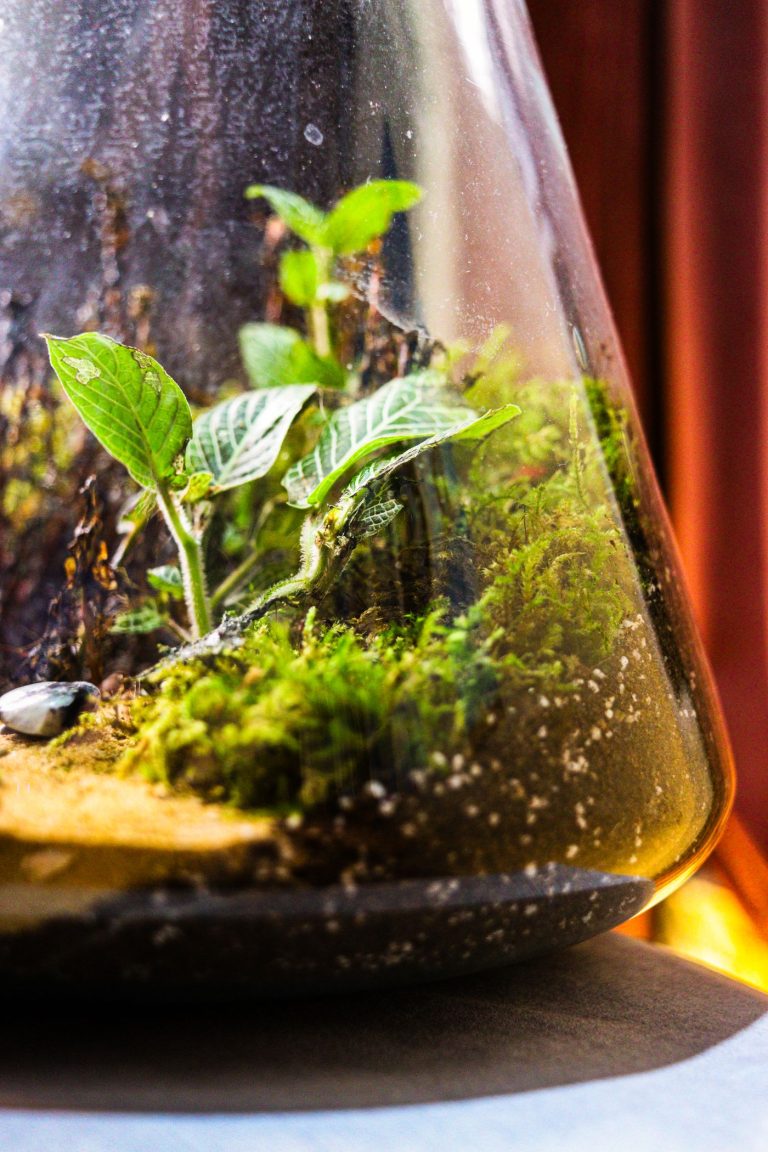
- Nerve plant (Fittonia) is the classic terrarium plant for good reason. Its veined pink, red, or white leaves love humidity, and it stays low and bushy. If it ever wilts it usually perks up within hours, a helpful early warning that the soil has dried.
- Polka dot plant (Hypoestes phyllostachya) brings speckled pink or white leaves and thrives in moist air. It can grow leggy, so pinch the tips now and then to keep it full.
- Small-leaved Peperomia, such as Peperomia caperata, adds rippled texture and deep colour. It likes humidity but dislikes sitting waterlogged, so give it a spot with a little more airflow near the surface.
- Pilea depressa trails tiny round leaves across the soil and over hardscape, softening edges as it spreads.
Ferns for soft texture
Ferns love the still, humid air of a closed terrarium and add a feathery contrast to rounder leaves. Compact varieties work best.
- Maidenhair fern (Adiantum) has delicate fronds that resent dry air in an open room but flourish under glass.
- Lemon button fern (Nephrolepis cordifolia ‘Duffii’) stays small and neat, with tidy rounded leaflets along each frond.
Give ferns a shadier corner and they will reward you with steady, lush growth.
Ground cover and moss
Low, spreading plants knit the scene together and cover bare soil, which is exactly what a natural forest floor looks like.
- Baby’s tears (Soleirolia soleirolii) forms a fine green carpet and grows quickly in humidity.
- Creeping fig (Ficus pumila) climbs glass and hardscape with small heart-shaped leaves. It is vigorous, so trim it to keep it in bounds.
- Spikemoss (Selaginella) gives a soft, mossy layer with a slightly feathery look and stays low.
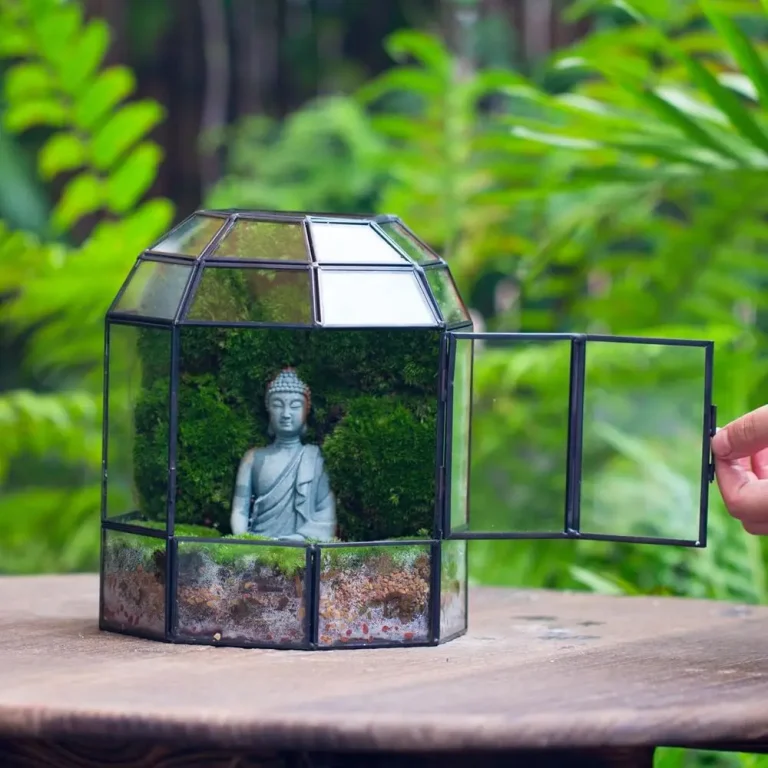
- True mosses such as cushion and sheet moss thrive in the constant damp and need almost no fuss. Our guide to keeping moss happy covers how to settle it in.
Plants to leave out
Some popular houseplants look tempting but will sulk or rot in a sealed container. Save these for an open pot instead:
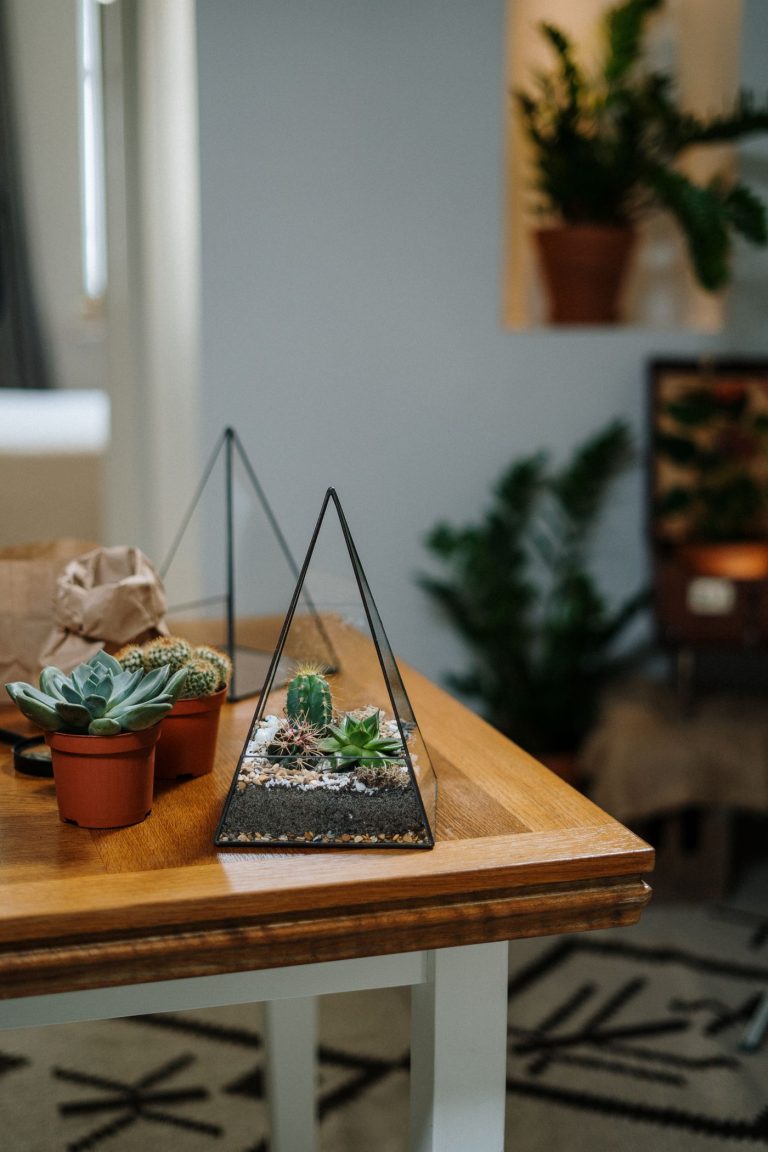
- Succulents and cacti need dry air and sharp drainage. In a humid terrarium they soften and rot within weeks.
- Large or fast-growing plants quickly outgrow the glass and crowd everything else. If you love a particular species, check its full size first.
- Most flowering houseplants want more light and airflow than a closed terrarium offers, and spent blooms can invite mould.
Arranging your plants for a natural look
A little planning at the planting stage makes the finished terrarium feel like a real slice of woodland rather than a row of pots. Keep it simple:
- Place taller plants and ferns toward the back or centre, where they draw the eye.
- Bring low ground cover and moss to the front, so nothing hides behind it.
- Plant in odd numbers, which almost always looks more natural than pairs.
- Leave gaps for growth. What looks a touch sparse today will fill in within a month or two.
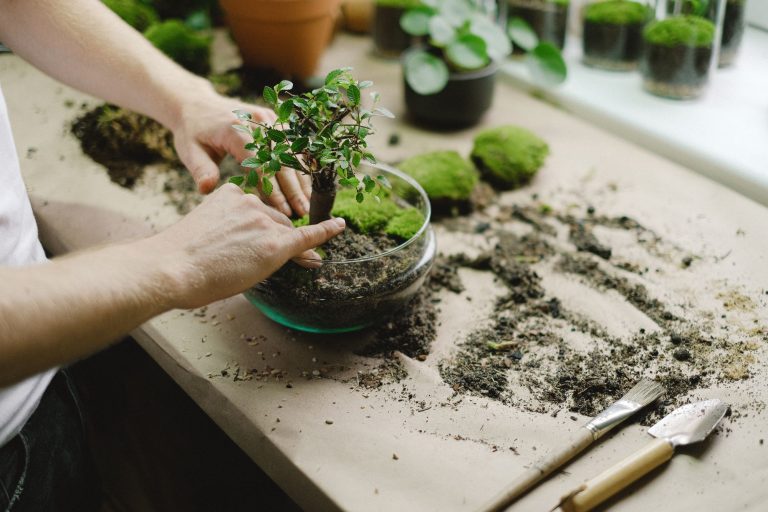
A piece of wood or a few stones adds structure and gives creeping plants something to climb. If you are still setting up your layers and hardscape, our step-by-step build guide walks through the whole process.
A simple starter combination
If you would rather not decide everything at once, this trio covers height, texture, and ground cover, and every plant in it is beginner friendly:
- One maidenhair or lemon button fern toward the back for soft height.
- Two or three nerve plants in the mid-ground for colour.
- A carpet of baby’s tears or moss across the front to finish the floor.
It is a balanced planting that looks full within weeks and leaves you plenty to build on later.
Keeping your plants happy
Once planted, a closed terrarium asks for very little. A few habits keep everything healthy:
- Light: give it bright, indirect light and keep it out of direct sun, which overheats the sealed glass. Our notes on light and placement go into detail.
- Pruning: trim back anything that crowds the glass or overshadows a neighbour. Regular light pruning keeps the balance you designed.
- Watering: a closed terrarium recycles its own moisture, so it rarely needs topping up. A light mist when the soil looks dry is usually plenty.
- Cleanup crew: a small colony of springtails and isopods clears fallen leaves and keeps mould in check. See our guide to the terrarium cleanup crew.
Choose a handful of humidity-loving plants, give them room to settle, and a closed terrarium will look after itself for years. If you are ready to plant your first, the Glasshouse Mini makes a calm, self-contained home to start with. Take your time choosing, and enjoy watching it grow in.