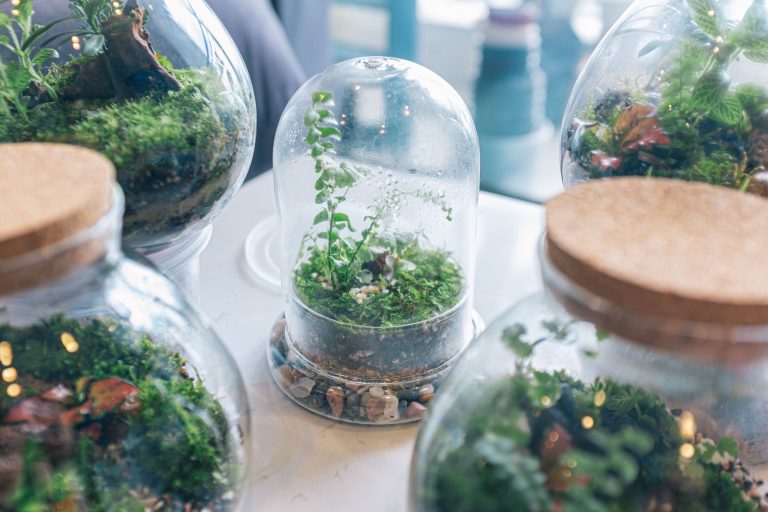
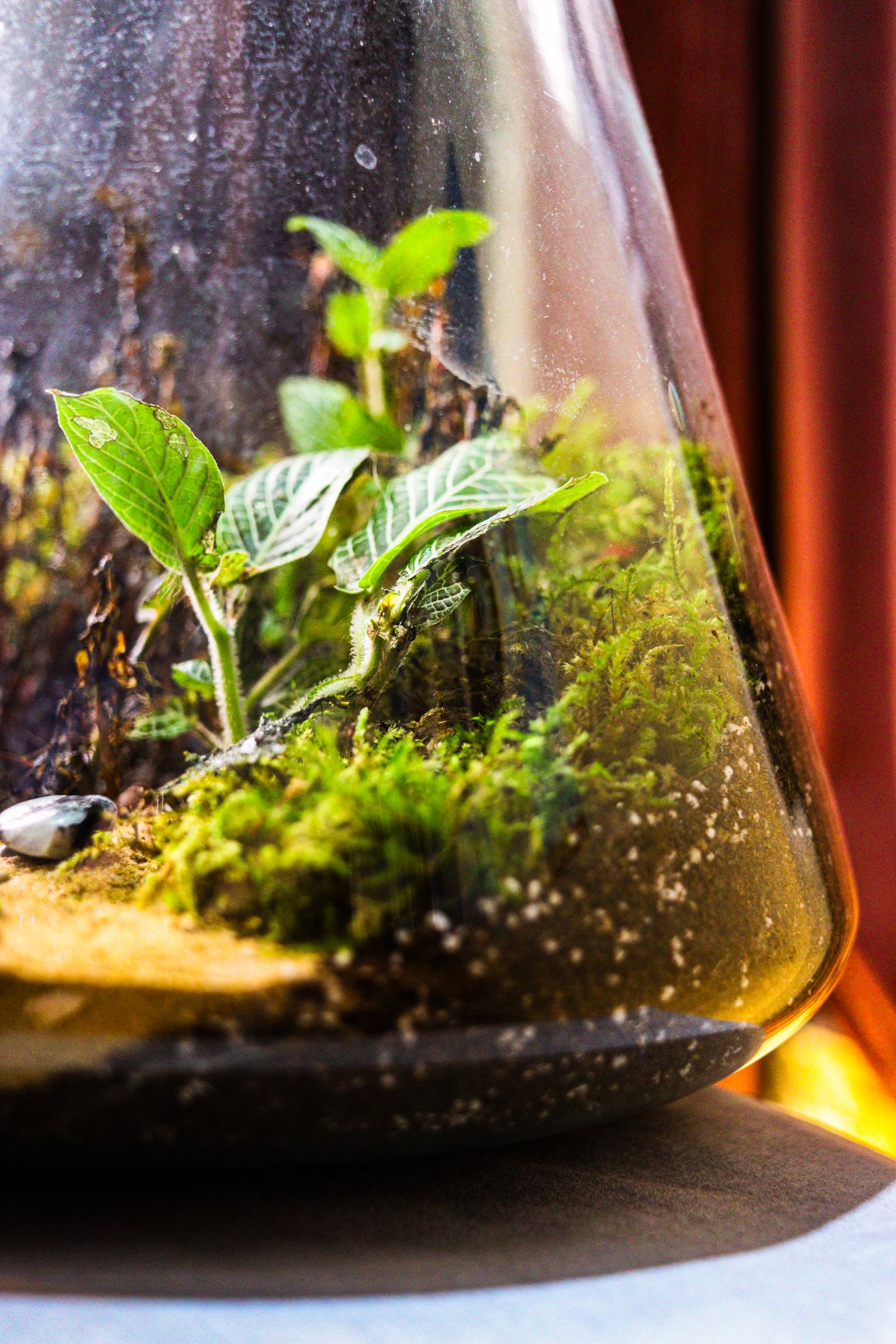
A bioactive terrarium works because its floor is alive, and leaf litter is one of the quietest ways to keep it that way. A thin scatter of dried leaves feeds the smallest residents, gives them somewhere to shelter, and lends the whole scene the settled look of a real woodland floor.
What leaf litter actually does
Leaf litter is simply a loose layer of dried, fallen leaves resting on top of your substrate. In a sealed, planted world it is far more than decoration. It is the part of the system your cleanup crew spends most of its time working through.
- It feeds the cleanup crew. Springtails and isopods graze on decaying leaves and the soft fungi that grow on them, turning fallen material into the gentle nutrients your plants draw on.
- It offers shelter. Isopods in particular hide, moult and breed under a loose leaf layer, so a steady supply keeps their numbers healthy.
- It protects the substrate. A leaf layer cushions the soil against misting, slows compaction, and holds a little extra humidity right at the surface where roots and moss sit.
- It finishes the look. Mottled brown leaves read instantly as a forest floor and soften the line between hardscape and planting.
If you have read our guide to springtails and isopods, this is the food source that keeps them busy between top-ups. A build with a healthy leaf layer tends to look after itself with very little from you.
On a woodland floor, fallen leaves are where decomposition begins, and your terrarium is a small version of the same cycle. Microbes soften the leaves, the cleanup crew grazes on them, and what passes through feeds the plants. Leaf litter is simply the raw material that keeps that loop turning.
A scatter of dried leaves is the simplest way to keep springtails and isopods fed. Think of it as stocking the pantry rather than feeding by hand.
Choosing the right leaves
Not every leaf belongs in a terrarium. The best ones break down slowly, resist going slimy, and carry a little natural tannin that helps keep mould in check. The aim is a layer that lasts and supports life, not one that turns to mush in a fortnight.
It also helps to match the leaf to the tank. Large magnolia or sea grape leaves suit a roomy build where their shape can be seen, while beech and smaller oak leaves sit more naturally in a compact terrarium. A mix of two or three types gives the floor a little variety and a longer feeding window, since they do not all break down at the same rate.
Good choices
- Oak. Tough, slow to break down, and rich in tannins. A reliable default for almost any build.
- Beech. Similar to oak, with a finer texture that suits smaller terrariums.
- Magnolia. Thick and long-lasting, ideal where you want the leaf shape to stay visible.
- Sea grape and Indian almond. Popular with keepers for their tannins and their slow, tidy breakdown.
What to avoid
- Leaves from trees that may have been sprayed, and anything gathered from roadsides or busy paths.
- Soft, thin leaves that rot quickly and can foul the substrate.
- Walnut, which carries a compound that is harmful to many small creatures.
- Anything you cannot confidently identify. When unsure, leave it out.
Preparing leaf litter safely
Preparation is quick, and it is mostly about making sure nothing unwanted comes along for the ride. You are not trying to make the leaves spotless, only clean and free of hitchhikers.
- Gather leaves from clean, pesticide-free ground well away from traffic, or buy prepared leaf litter if you would rather skip the foraging.
- Shake and rinse off loose soil and grit.
- If you are worried about pests or spores, give the leaves a short soak in just-boiled water, then let them cool. This sees off most unwanted passengers.
- Let them dry fully before use, and keep a jar of spares aside for future top-ups.
Resist the urge to sterilise everything to within an inch of its life. A little natural microbe activity on the leaves is exactly what your cleanup crew eats, so clean is the goal, not sterile.
Adding it to your terrarium
Leaf litter goes on last, resting on the substrate once your plants and moss are in. It sits above the drainage and soil you built up when you set the tank going, so if you want a refresher on what lies beneath, our guide to terrarium layers covers the full stack.
- Scatter a thin, loose layer rather than packing down a solid mat, which can trap stale, airless pockets.
- Leave your moss and plants showing through. A partial covering looks more natural than a full carpet.
- Tuck a little under wood and into shaded, damp corners, which is where isopods like to gather.
Keeping it going
A leaf layer is not a one-time job, which is part of its charm. As the cleanup crew works through it, you simply add more.
- Top up every one to two months, or whenever the layer looks noticeably thinner. Leaves slowly turning to lace is a good sign, not a problem.
- A little white fuzz on fresh leaves is normal in the first week and usually clears on its own. A strong springtail population speeds this along, and our guide to setting up a springtail culture shows how to keep plenty on hand.
- If leaves turn slimy or black, you have likely added too much, too wet. Remove the excess and use a lighter hand next time.
A living floor, finished
Leaf litter is a small thing that quietly does a lot. It keeps your cleanup crew fed, holds humidity where it is needed, and makes a new build look like it has always been there. Once it is part of your routine, topping it up now and then is most of the care a healthy bioactive terrarium asks for.
If you are building your first bioactive setup and want a vessel made for a living floor, the Glasshouse Mini is a calm place to start. Add your leaf litter, let the cleanup crew settle in, and enjoy watching the whole thing find its balance.