
Terrariums are gentle on your time, but they do notice the seasons. As the days shorten and the heating comes on, a few small adjustments keep the glass clear and the plants content through winter.
What winter actually changes
A terrarium is a small, buffered world, so it rides out the cold months far more calmly than a houseplant on a windowsill. The two things that shift most are light and air. Daylight gets shorter and weaker, and indoor heating makes rooms warmer and drier while window glass turns cold at night.
None of this is a problem on its own. It simply means the care that suited summer needs a light touch of rebalancing. Most of the work is noticing, not doing.
Light is the thing that changes most
In a British winter the sun sits low and the days are short, so even a bright room gives your terrarium far fewer hours of usable light than it did in July. Plants respond by stretching toward whatever light there is, growing pale and leggy, and moss can lose a little of its colour.
You have three easy ways to help, in order of effort:
- Move it to the brightest spot you have, near a window that gets plenty of daylight but no harsh direct sun.
- Keep the glass clean. A quick wipe inside and out lets more of that scarce light reach the plants.
- If a room is genuinely dim, add a small grow light on a timer to top up the shorter days.
A grow light is the most reliable fix for a dark flat or a north-facing room, and it makes a real difference between November and February. If you are weighing one up, our guide to whether your terrarium needs a grow light walks through when it is worth it and when daylight is enough.
Warmth, and where you keep it
Most terrarium plants, ferns, fittonia, moss and the like, are happy in the same range you are, roughly 18 to 24 degrees. They cope with a little less, but they dislike sudden swings and cold draughts. Winter is mostly about avoiding two extremes that sit right next to each other in a typical home.
Keep it off the radiator
A spot above or beside a radiator feels cosy to us, but for a terrarium it means hot, dry air and wild temperature swings every time the heating cycles on and off. That dries the top of the substrate and stresses the plants.
Keep the glass off the cold window
On a frosty night a single-glazed window can get very cold, and foliage pressed against that glass can chill or mark. Leave a little gap between the terrarium and the pane, and pull it back into the room on the coldest nights. A spot a foot or so back from a bright window usually finds the happy middle.
Watering and humidity in the heated months
This is where most winter mistakes happen, and nearly all of them are the same mistake: too much water. Plants grow slowly in low light, and cooler, more humid glass means moisture evaporates slowly, so your terrarium needs less from you, not more.
- Mist less often and more lightly than you did in summer.
- Let the substrate guide you rather than the calendar. Damp is right; waterlogged and swampy is not.
- A closed terrarium recycles its own water, so it can go weeks between top-ups once it has settled.
If you are unsure how much is enough, our full guide to watering and misting gives you a simple way to read your own setup.
Reading the condensation
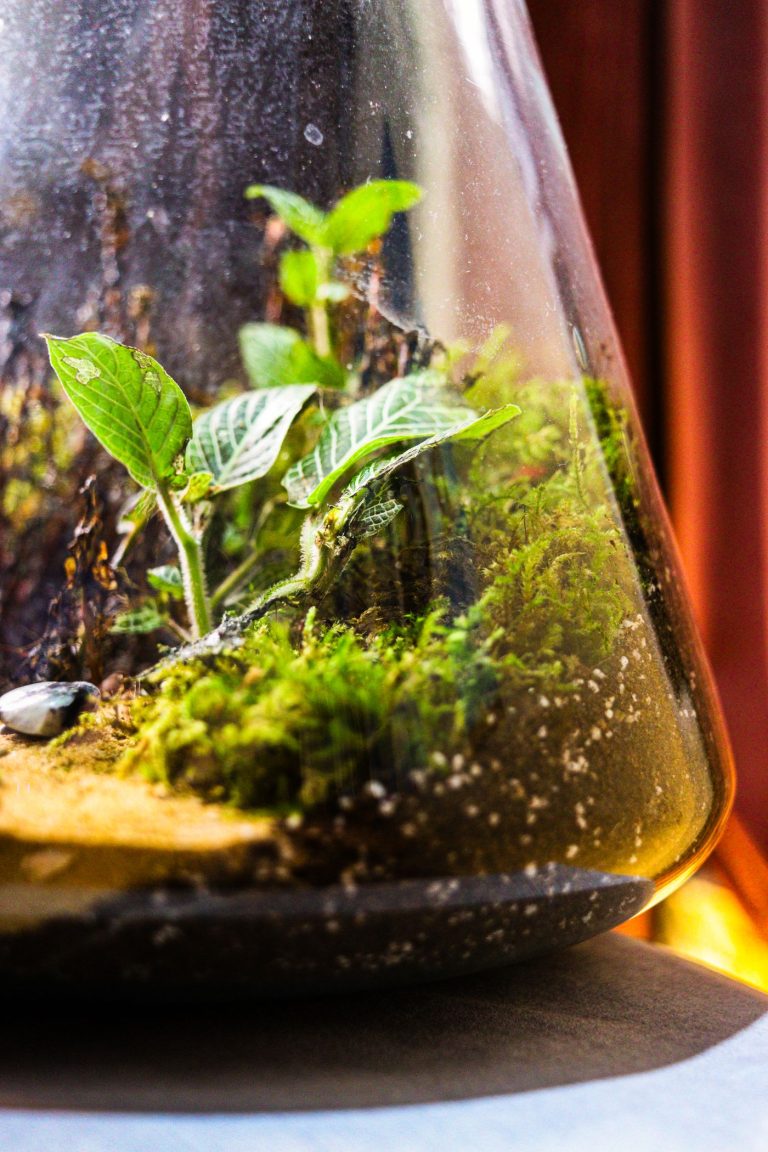
Winter brings a warm room against cold glass, which naturally produces more condensation. A little is healthy and tells you the water cycle is working. A light mist on the glass that clears for part of the day is exactly what you want in a closed terrarium.
If the glass is so fogged you cannot see the plants, and it stays that way all day, the terrarium is holding too much water. Take the lid off for a few hours to let it breathe, then put it back.
Persistent heavy fog, or mould taking hold on leaf litter, is worth acting on rather than waiting out. Our guide to terrarium troubleshooting covers fog, mould and pests step by step.
Your cleanup crew in the cold months
If your terrarium is bioactive, the springtails and isopods doing the quiet work of recycling waste and keeping mould in check slow down a little when things are cooler, just as the plants do. At normal indoor room temperature they stay perfectly active, so there is nothing special to do for them in winter.
They are part of what makes a settled terrarium largely self-sustaining, which is a real comfort in the busy weeks before the new year. Keep the enclosure at room temperature and they will carry on tidying up without any help from you.
A simple winter checklist
If you only remember a handful of things through the colder months, make it these:
- Give it the brightest light you have, and keep the glass clean so that light counts.
- Keep it away from radiators and off cold window glass.
- Water and mist less, and let the substrate tell you when.
- Expect a little more condensation, and air it out only if the glass stays fully fogged all day.
- Leave the cleanup crew to it. Room temperature is all they ask.
A calm bit of green through the dark months
Winter is actually one of the nicest times to have a terrarium. When the garden is bare and the light is thin, a small pane of living green on the shelf is a quiet thing to look after and a lovely thing to look at. A few gentle adjustments are all it takes.
If someone you know would welcome that through the winter, or you are thinking of starting one yourself, our First Wild starter kit includes everything to build a bioactive terrarium, with an illustrated step-by-step guide to see you through the first weeks. No rush, and no wrong time of year to begin.