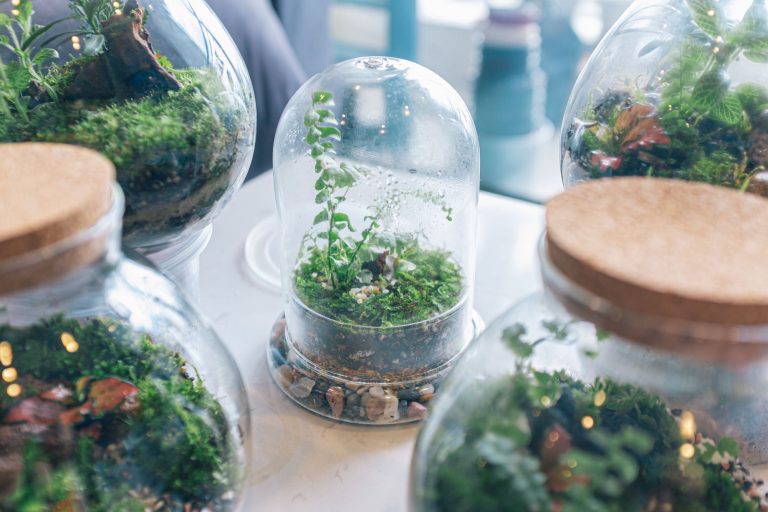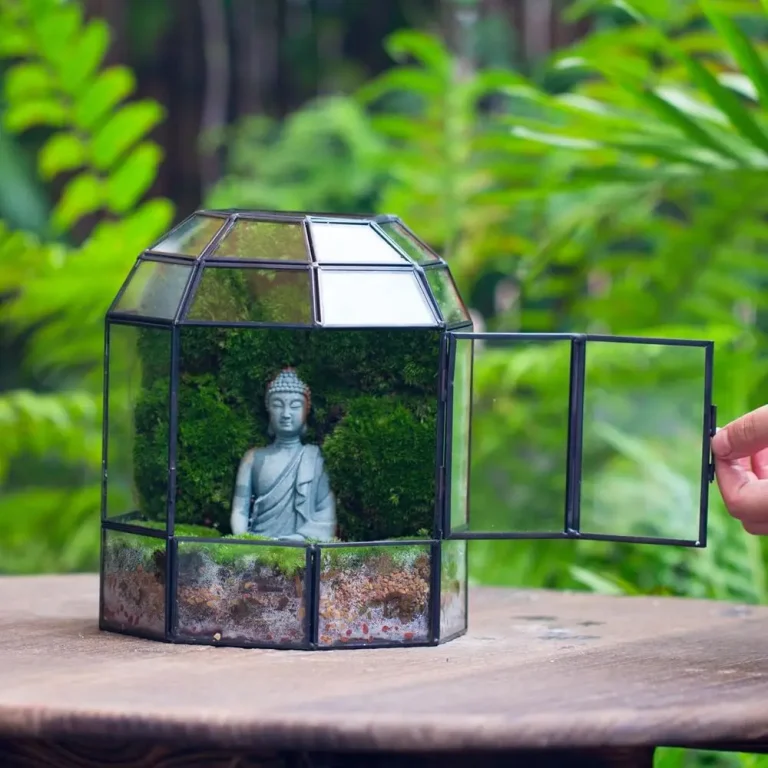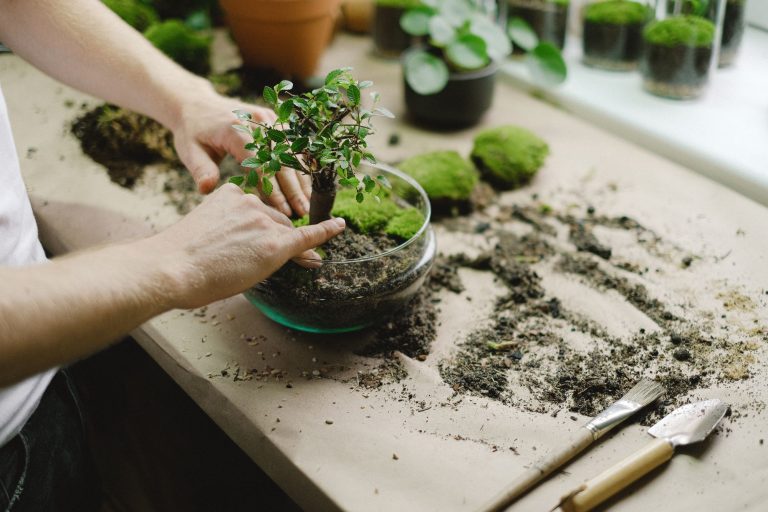
Watering is where most terrariums go wrong, and almost always from kindness rather than neglect. A sealed glass world holds moisture very differently from a pot on the windowsill, so the habits that keep a houseplant happy can quietly drown a terrarium.
How a terrarium handles water
A closed terrarium is a small water cycle under glass. Moisture rises from the soil and leaves, gathers on the walls, and returns to the substrate, so the same water is used again and again. Once it settles, a healthy closed setup can go weeks or months between waterings.
An open terrarium behaves more like a normal planter. Without a lid, moisture escapes into the room, so these need topping up more often, though still less than you might expect. Knowing which type you have is the first step, and our guide on open versus closed terrariums walks through the difference.
The most common cause of a failing terrarium is too much water, not too little. When in doubt, wait a few days and watch before you reach for the mister.
Reading the condensation
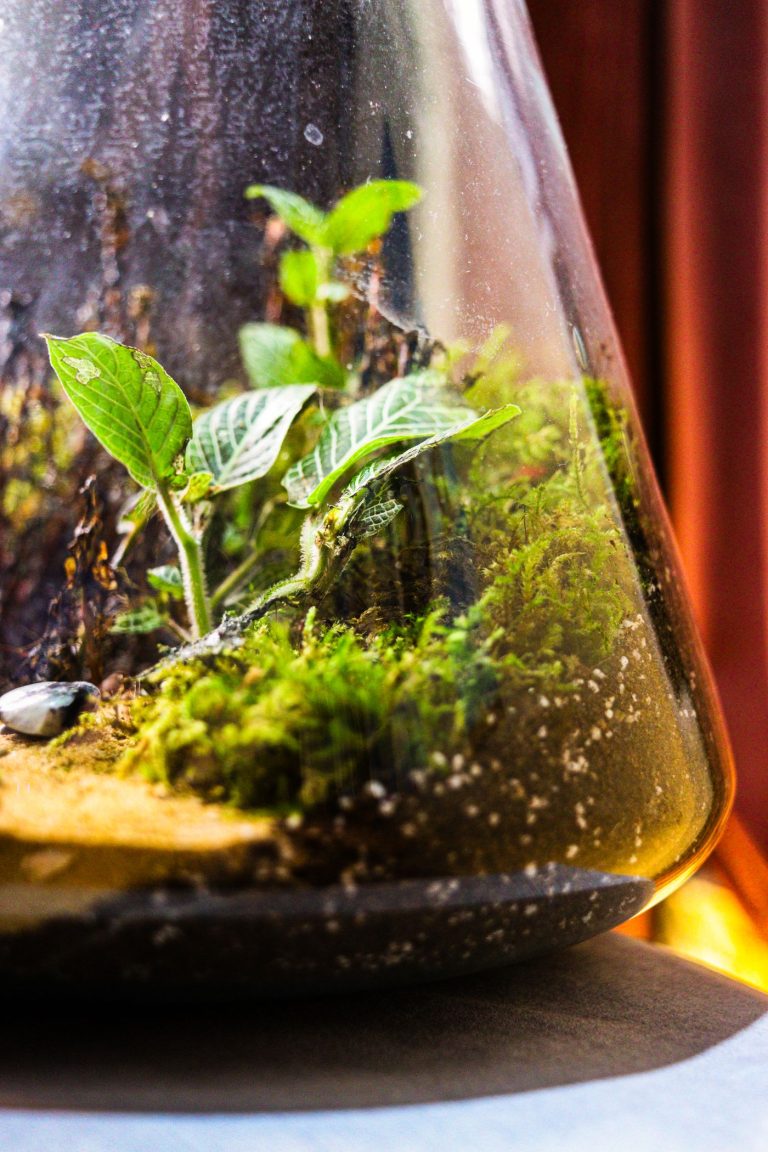
The glass itself is your best gauge. In a closed terrarium, condensation is not a problem to fix but a signal to read, and learning it takes only a week or two of looking.
What healthy looks like
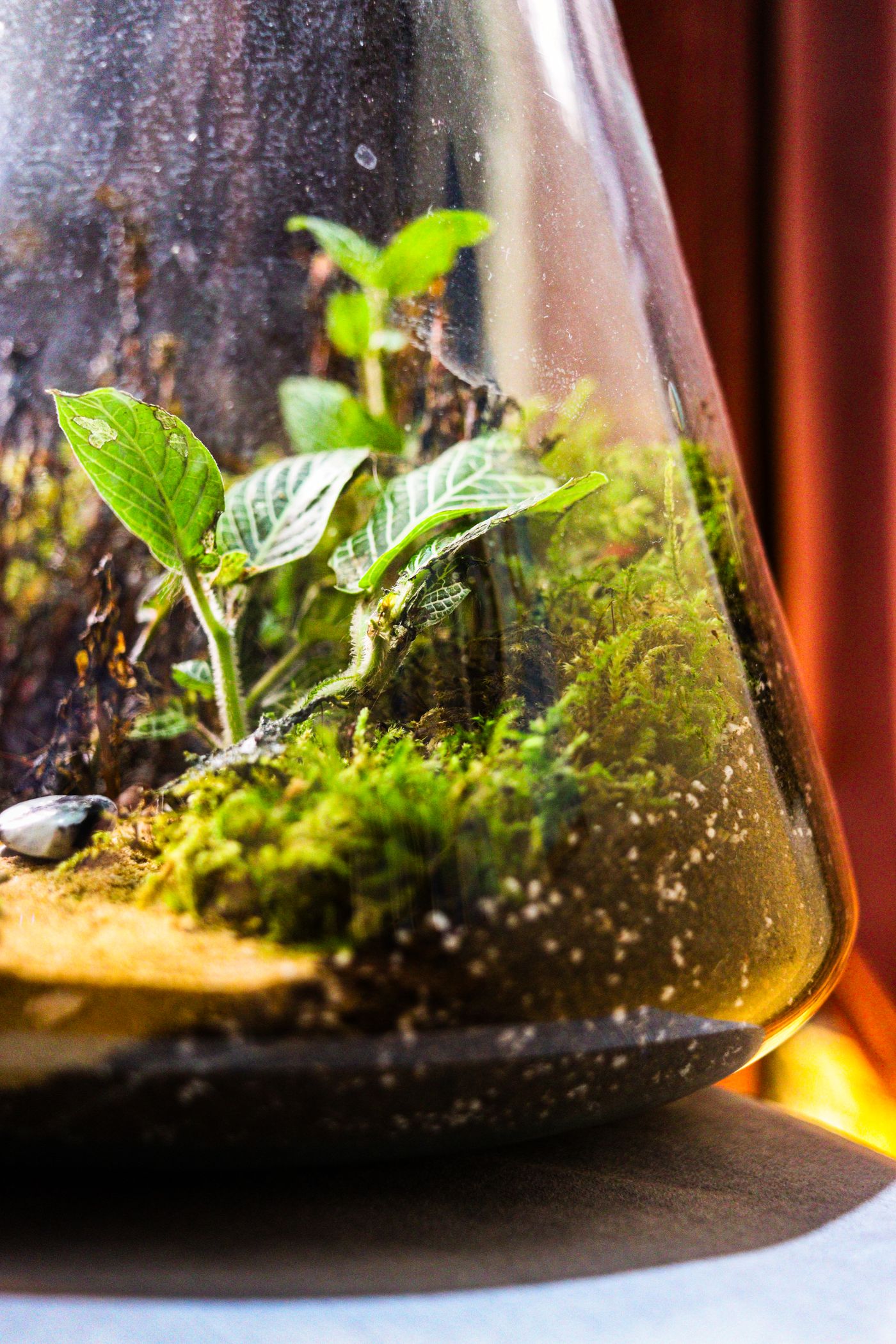
A light mist on the glass in the morning that clears by the afternoon is exactly right. It tells you the water cycle is turning and the air inside stays humid without becoming waterlogged.
When there is too much water
- Heavy fog that never clears, so you cannot see the plants for most of the day.
- Large droplets running down the glass and pooling at the base.
- Standing water visible in the drainage layer at the bottom.
- Mould, yellowing leaves, or soft, mushy stems.
If you see these, take the lid off for a day or two to let some moisture escape, then close it again once the glass clears. A working drainage layer buys you room for the occasional heavy hand, giving surplus water somewhere to sit safely below the roots.
When there is too little
- No condensation at all, even first thing in the morning.
- Moss turning pale, brown, or crisp at the edges.
- Soil pulling away from the sides of the glass as it dries and shrinks.
How to add water the right way
When a terrarium genuinely needs water, add it gently and in small amounts. It is far easier to add a little more tomorrow than to remove water once it has pooled at the bottom.
- Reach for a fine mister rather than a jug. A spray settles evenly over moss and leaves instead of flooding one spot.
- Mist in short bursts, pausing to let the substrate take up the moisture before adding more.
- Aim at the plants and the surface of the soil, not the drainage layer beneath.
- Stop as soon as the moss looks freshened and the leaves carry a few fine droplets.
A steady, controllable spray makes all of this easier, which is why a proper sprayer earns its place on the shelf. Our vintage glass mister gives a soft, even mist that suits both delicate moss and closed builds.
A rough rhythm to start from
Every room is different, so treat these as starting points and let the glass correct you.
- Closed terrarium: often nothing for weeks. Only mist lightly when condensation stops appearing and the moss looks thirsty.
- Open, tropical planting: a light water or misting roughly once a week, adjusting to how quickly the surface dries.
- Open, succulent or arid planting: a small drink at the roots every couple of weeks, letting the soil dry out fully in between.
How the seasons shift the rhythm
Watering is not the same all year round. In summer, warmth and longer days speed up evaporation, so an open terrarium may dry a little faster and want checking more often. In winter, central heating dries the room air while lower light slows the plants down, so growth eases off and most setups need even less.
Rather than memorise a calendar, keep reading the glass and the moss through the changing months. A closed terrarium in particular will hold its own weather remarkably steadily, asking for very little whatever the season.
Which water to use
For most terrariums, ordinary tap water left to stand for an hour is perfectly fine. The main downside of hard water is cosmetic, as dissolved minerals can leave pale spots on the inside of the glass over time.
If you live in a hard water area and want the glass to stay clear, rainwater or filtered water keeps those marks to a minimum. It is a small refinement rather than a rule, so do not let it stop you getting started.
Let the cleanup crew help
A little extra moisture now and then is not a disaster in a bioactive setup. Springtails and isopods graze on mould and break down decaying matter, which softens the effect of an occasional overwatering and keeps the surface tidy.
They are not a licence to overwater, but they do give a well-built terrarium some forgiveness, quietly working through the odd patch of mould before it spreads.
Common watering mistakes to avoid
- Watering on a fixed schedule instead of reading the glass and the plants.
- Pouring rather than misting, which floods the drainage layer and starves the roots of air.
- Panicking at the first sign of condensation and wiping it away, when a light morning mist is a sign of health.
- Topping up a closed terrarium out of habit when it is already recycling its own moisture.
Get into the habit of looking before you water, and the terrarium will tell you almost everything it needs. If fog, mould, or damp are already troubling you, our troubleshooting guide covers how to bring a wet setup back into balance.
Watering, in short
Terrariums ask for patience more than attention. Read the condensation, add water slowly and only when the glass and plants call for it, and let the cleanup crew handle the rest. Do that, and a closed build will look after itself for a long time between visits.
When you are ready to build one that holds its own humidity beautifully, take a look at our Glasshouse bioactive terrarium tanks and start with a setup made to keep its own weather.