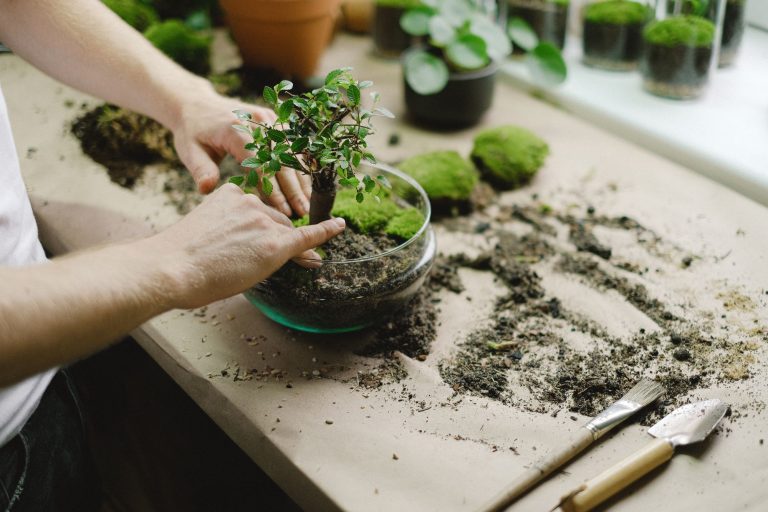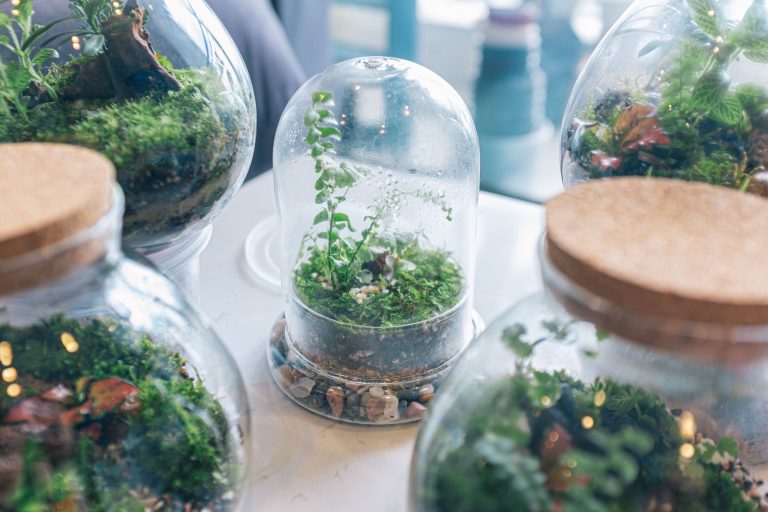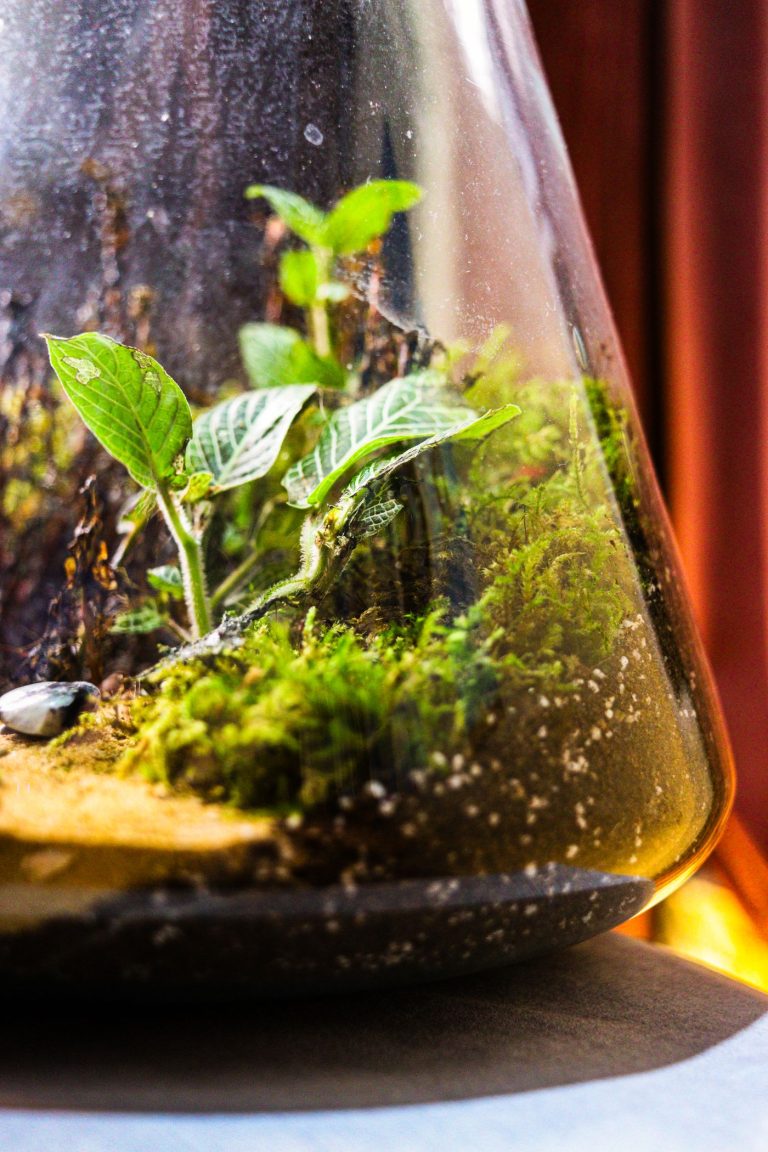
Light is the one thing a terrarium cannot go without, and it is also the thing people most often get wrong. If your plants look pale, stretched, or slow to grow, it is worth working out whether your room simply needs a little help from a grow light.
How much light a terrarium really needs
Almost every terrarium plant wants bright, indirect light. That means a well-lit spot near a window, but out of the path of harsh midday sun. It is the kind of light you get a step or two back from a bright window, or beside one that faces north or east.
Direct sun is a particular risk for closed terrariums. The glass traps heat the same way a greenhouse does, so a sealed jar on a sunny sill can climb to temperatures that scorch leaves and cook the cleanup crew. Open vessels are more forgiving, but even then an hour of strong afternoon sun can dry plants out quickly.
Bright and indirect is the target. Enough light to read by comfortably all day, without the sun ever landing directly on the glass.
A quick way to judge a spot is the shadow test. Hold your hand a little above where the terrarium will sit at midday. A soft, fuzzy-edged shadow means bright indirect light, which is ideal. A sharp, crisp shadow means direct sun that is too strong, and almost no shadow at all means the spot is probably too dark.
If you are still deciding where a new build should live, our guide to light and placement walks through the best spots room by room.
Signs your terrarium is not getting enough light
Plants are honest about low light. They show it in their growth well before they give up, so these are the things to watch for:
- Leggy, stretched stems. New growth reaches out with long gaps between leaves, as the plant hunts for brighter light.
- Pale or washed-out leaves. Colour fades and variegated plants lose their patterning.
- Leaning toward the glass. Everything grows in one direction, toward the nearest window.
- Thin, browning moss. Moss is a good early warning. It turns dull and patchy when light drops too low.
- Slow or stalled growth. Weeks pass with nothing new, even though watering and humidity are fine.
One or two of these together usually means the spot is too dim, rather than anything wrong with your care routine.
When a grow light makes sense
Plenty of terrariums thrive on daylight alone. A grow light is not something everyone needs, but there are a few situations where it genuinely earns its place:
- Interior rooms with no nearby window, such as a hallway, a bathroom, or a desk in the middle of an office.
- North-facing homes in winter, when short, grey days leave even a bright room short on hours of usable light.
- A spot you have chosen for how it looks rather than for the light, like a bookshelf or a console table away from the windows.
- Year-round consistency, if you would rather your plants grow steadily than slow right down each autumn.
In all of these, a small grow light fills the gap between the light a plant wants and the light the room can offer.
How to choose a grow light
You do not need anything powerful or expensive for a terrarium. The plants are small, close together, and happy with modest light, so a gentle, well-placed lamp does the job.
Spectrum and colour
Look for a full-spectrum LED. For leafy, green terrarium plants, a daylight-white light of around 6500K looks natural in the home and gives plants the range they use to grow. The pink and purple grow lights sold for vegetables work too, but the colour can be unflattering in a living space.
Brightness and distance
A low-wattage LED is plenty for a single terrarium. Modern LEDs run cool, which matters for a closed build, but it is still worth keeping the light a sensible distance above the glass and checking that the terrarium does not warm up or fog heavily once it is switched on. If condensation suddenly covers the whole front, move the light a little further back.
Timing
Consistency does more than intensity here. Aim for a steady daily cycle and let the plants rest in the dark overnight, just as they would outdoors.
- Run the light for roughly 8 to 12 hours a day.
- Use a plug-in timer so it comes on and off at the same time without you thinking about it.
- Give plants a proper dark period. Leaving a light on around the clock does more harm than good.
Plants and spots that do fine on daylight alone
Before you reach for a lamp, it is worth remembering how little light many classic terrarium plants actually need. If your vessel sits in a bright indirect spot, these will usually be content without any help:
- Ferns, most of which evolved on shaded forest floors. Our guide to the best ferns for terrariums covers the easiest types.
- Fittonia, the nerve plant, which keeps its colour in gentle, steady light.
- Moss, which prefers soft, even light and dislikes direct sun.
- Pilea and other small foliage plants that are used to the dappled light beneath a canopy.
Our round-up of the best plants for a closed terrarium leans toward exactly these low-light, humidity-loving species, so a careful plant choice can often save you from needing a grow light at all.
Remember that low light still means some light. Even the most shade-tolerant plant needs enough to photosynthesise, so a truly dark corner is the one place no terrarium will be happy.
Putting it together
Start with the light you already have. Give your terrarium the brightest indirect spot in the room, choose plants that suit that level of light, and watch how they respond over a few weeks. If growth stays pale or leggy despite a good position, or if the only place you love for it sits far from a window, a simple full-spectrum LED on a timer will quietly close the gap.
If you are planning a build for a darker room, a closed tank with a fitted lid holds humidity steadily while you dial the lighting in. The Glasshouse Mini is an easy size to pair with a small grow light, and a calm place to start. Whatever you choose, let the plants guide you, and add light only when they ask for it.