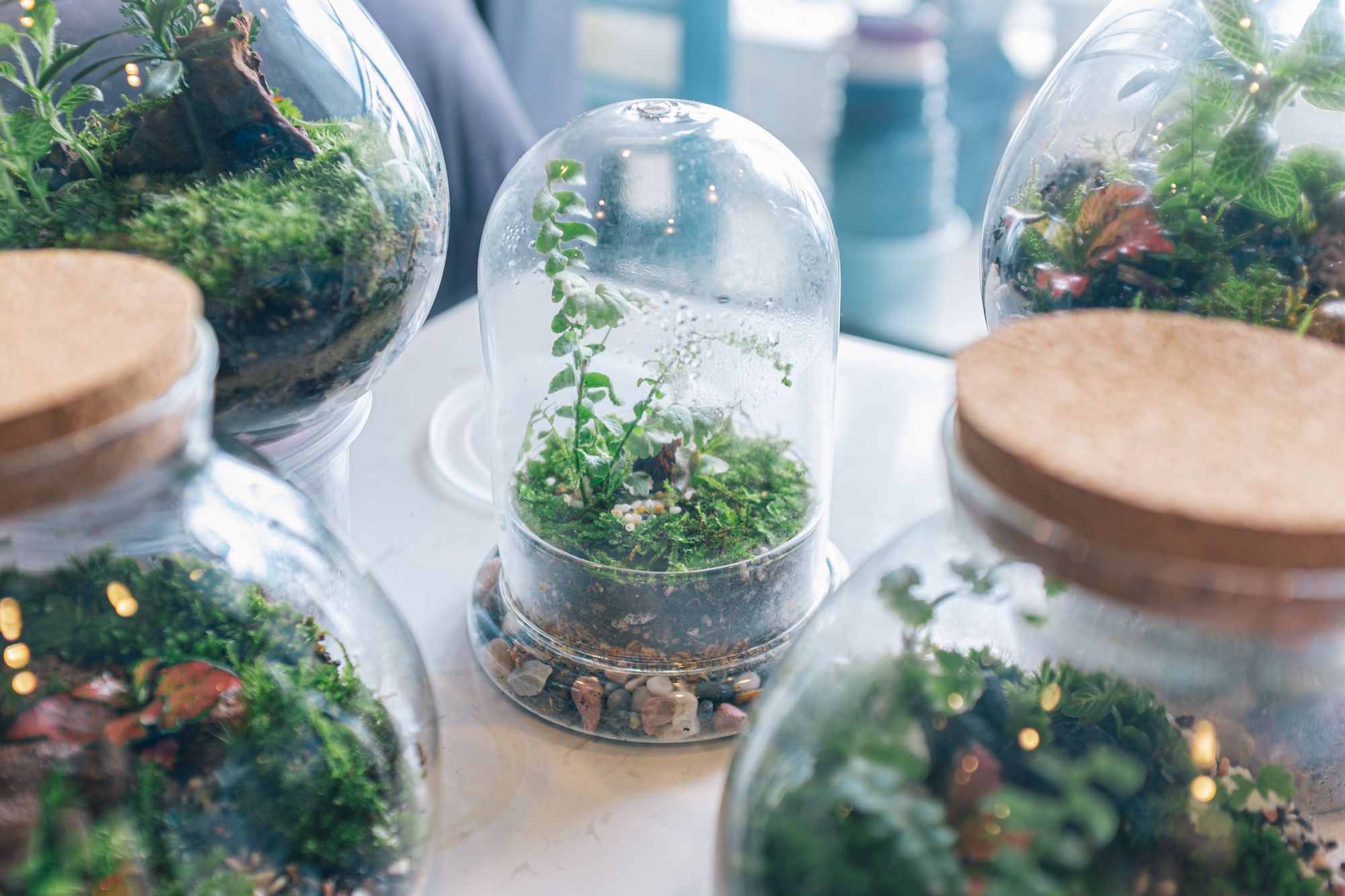
Few plants look as at home under glass as a fern. Their soft, unfurling fronds love the warm, humid air of a terrarium, and with the right choices they will stay lush for years with very little from you.
Why ferns suit life under glass
Most ferns come from shaded forest floors and damp riverbanks, where the air is moist and the light is soft. A terrarium recreates those conditions almost perfectly, which is why a fern that sulks on a dry windowsill can flourish behind glass.
Delicate ferns like maidenhair are famously difficult as houseplants because ordinary rooms are too dry for them. Inside a terrarium the humidity stays high and steady, so the fronds keep their colour instead of crisping at the edges.
When you are weighing up a fern for a terrarium, look for a few simple things:
- It enjoys high humidity and steadily damp soil.
- It is happy in bright, indirect light rather than direct sun.
- It stays naturally small, or grows slowly enough to trim.
- Its fronds are soft and leafy rather than tough and leathery.
Ferns also pair beautifully with moss, which carpets the soil and holds moisture around their roots. If you want to build a soft green base first, our guide to keeping moss happy is a good place to start.
The best ferns for a terrarium
Not every fern is a good fit. Some stay politely small, while others will fill a jar within a season and press against the glass. The trick is to match the fern to the container, so here are reliable choices grouped by the kind of setup they suit.
Ferns for closed terrariums
Closed containers stay warm and very humid, which suits the thirstiest, most delicate ferns. These stay compact and love the sealed environment:
- Maidenhair fern (Adiantum): fine black stems and airy, fan-shaped leaflets. It needs constant moisture, so a closed terrarium is one of the few places it truly thrives.
- Lemon button fern (Nephrolepis cordifolia ‘Duffii’): small, round leaflets on arching fronds. Compact, forgiving, and a lovely first fern.
- Heart fern (Hemionitis arifolia): unusual heart-shaped leaves on slim stems. It stays tiny and adores humidity.
- Silver ribbon fern (Pteris cretica): slender fronds with a pale central stripe. It grows a little larger but responds well to trimming.
These sit happily alongside other humidity lovers. For a fuller planting scheme, see our companion piece on the best plants for a closed terrarium.
Ferns for open terrariums and larger tanks
Open bowls and cloches have drier, more breathable air, and roomier tanks give bigger ferns space to arch and spread. These are the better fit here:
- Button fern (Pellaea rotundifolia): dark, rounded leaflets on wiry stems. Unusually for a fern, it prefers slightly drier air, so it does well in open setups.
- Blue star fern (Phlebodium aureum): broad, blue-green fronds that reach outward. Give it room in a larger container.
- Bird’s nest fern (Asplenium nidus): glossy, upright rosettes. Dwarf forms work while young, but they earn their place in a bigger tank.
The single most common mistake is planting a fern that outgrows its home. Check the mature size before you plant, and give arching ferns the width they need.
If you have your eye on the larger, faster-growing ferns, plant them somewhere with real headroom, such as The Glasshouse Grand, so they can spread without crowding the glass.
How to plant a fern in a terrarium
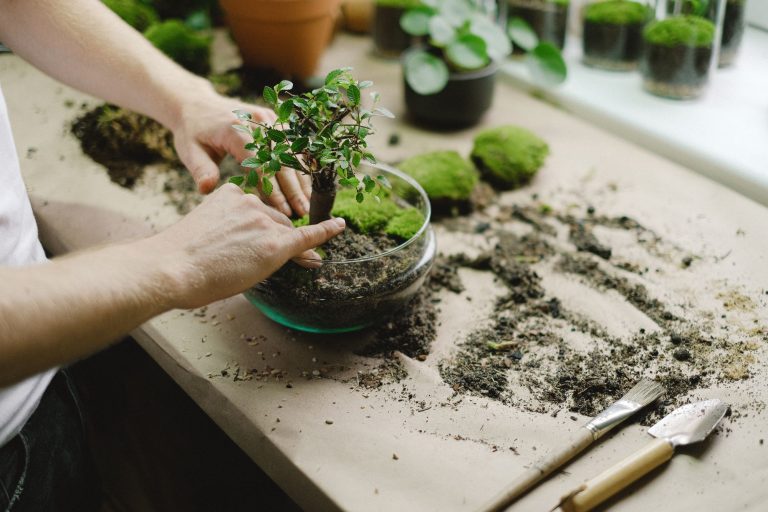
Ferns settle in quickly when their roots have moisture-retentive but well-draining soil beneath them. Work gently, as their roots and fronds bruise easily.
- Build your layers first: a drainage layer at the base, a mesh or fine barrier, then a moisture-retentive planting substrate on top.
- Slide the fern from its pot and loosen the root ball with your fingers to free the outer roots.
- Make a small hollow in the substrate, set the roots in, and firm the soil around the base without burying the crown.
- Leave space between plants for air to move and for the fern to grow into.
- Mist lightly to settle the soil around the roots and lift any dust from the fronds.
If your fern grows from a furry surface rhizome, as rabbit’s foot ferns do, rest that rhizome on top of the soil rather than covering it, or it may rot.
Caring for terrarium ferns
Once planted, ferns ask for very little. Most problems come from too much sun or air that is too dry, so those are the two things worth getting right.
Light and warmth
Give ferns bright, indirect light. Direct sun scorches the fronds and heats the glass like a small greenhouse, which can cook everything inside. A spot near a window that never catches direct rays is ideal, and normal room temperature suits almost every terrarium fern.
Humidity and watering
In a closed terrarium the moisture recycles itself, so you will rarely need to water. Open setups dry out faster and benefit from a light misting when the surface looks dry. Aim for soil that stays evenly damp, never waterlogged, as standing water is the quickest way to rot fern roots.
A fine mister is the gentlest way to refresh humidity without soaking the soil. Something like The Mister gives an even, soft spray that settles the fronds rather than battering them.
Pruning and tidying
Old fronds naturally brown and fade. Snip them off at the base with clean scissors, which keeps the plant tidy and makes room for fresh growth to unfurl. Removing tired fronds also stops them decaying against the soil and inviting mould.
Common fern problems and quick fixes
Ferns are honest plants. They tell you what they need through their fronds, so a quick read of the symptoms usually points to the cause:
- Crispy brown tips: the air is too dry. Mist more often, or move a thirsty fern into a closed setup.
- Yellowing, soft fronds: the soil is too wet. Ease off watering and check that your drainage layer is doing its job.
- Pale, stretched growth: not enough light. Move the terrarium somewhere brighter, still out of direct sun.
- No new fronds: often just seasonal rest, but check warmth and humidity are steady before worrying.
A healthy cleanup crew of springtails will quietly deal with the odd fallen frond and any surface mould, keeping the whole scene balanced while your ferns fill in.
Ferns reward a little patience with some of the most graceful growth you can keep under glass. Choose a type that matches your container, give it soft light and steady moisture, and it will keep unfurling new fronds for years. When you are ready to plant one, our terrarium range has a home to suit ferns of every size.