A thriving springtail culture is one of the most useful things a terrarium keeper can have on the shelf. It costs almost nothing to run, it gives you a steady supply of tiny cleaners for every build, and it takes about five minutes of attention a month.
Why keep a springtail culture
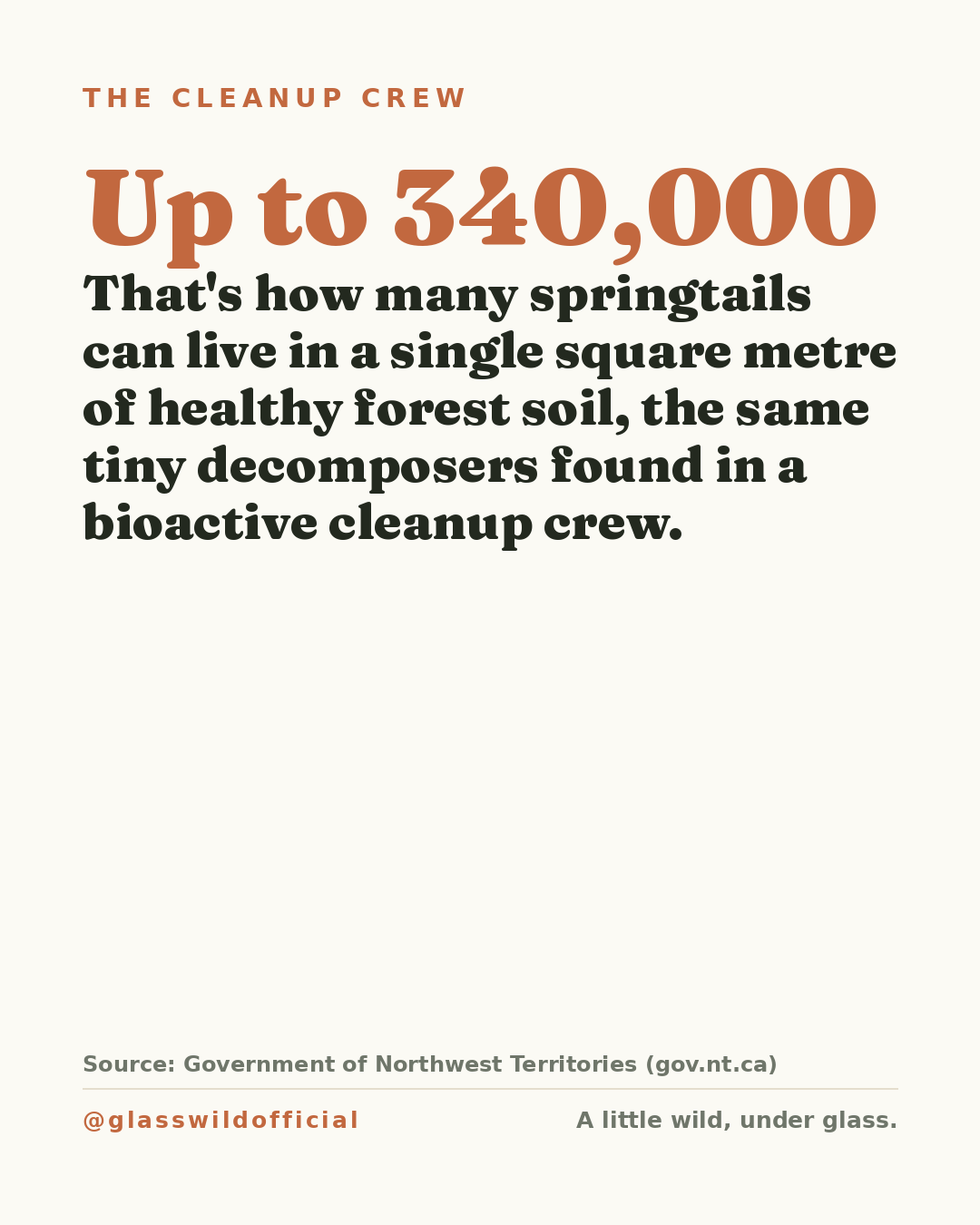
Springtails are small, soft-bodied invertebrates that feed on mould, decaying leaves, and organic waste. In a sealed terrarium they are a quiet, hard-working part of the cleanup crew, keeping the surface clean and the soil alive without any help from you.
Keeping your own culture means you always have more on hand. You can seed a new build straight away, top up an older terrarium whose numbers have dipped, or share a scoop with a friend who is just starting out. Glass Wild kits do not ship with live animals, so a home culture is the simplest way to have a cleanup crew ready whenever you need one.
A single pot of springtails, looked after well, can supply every terrarium you build for years. It is the cheapest insurance a bioactive setup has.
What you need to start
You do not need anything specialist. Most of this is already in the kitchen or the potting shed.
- A clear plastic tub with a lid, roughly the size of a lunchbox.
- A starter culture of springtails (a small amount goes a long way).
- Either horticultural charcoal or a handful of coco coir or peat-free compost.
- Dechlorinated or rain water, since chlorine can harm them.
- A pinch of food, such as inactive brewer’s yeast or a few plain rice grains.
For the starter culture itself, the usual route is a small portion from another keeper, a local reptile or aquatics shop, or a specialist supplier. If you already run a settled bioactive setup, you can often lift a scoop of surface substrate from there to seed the new pot.
Choosing a culture method
There are two reliable ways to house a culture. Both work well, so pick the one that suits how you like to harvest.
The charcoal method
Fill the base of your tub with a shallow layer of horticultural charcoal, then add water until the charcoal sits half submerged. The springtails live on the wet charcoal and the water surface. This method is clean, slow to go wrong, and very easy to harvest, because you simply tip water out and the springtails float across with it.
The substrate method
Fill the tub with a few centimetres of moist coco coir or peat-free compost instead. This feels more like their natural home and tends to build large numbers quickly. It is a little messier to harvest, since you are working with soil rather than water, but many keepers prefer the higher yield.
Setting it up step by step
- Clean the tub with plain water and let it dry. Avoid soap residue.
- Add your chosen base, either the charcoal and water or the moist coco coir.
- Check the moisture. The charcoal should be sitting in water; the coir should feel damp like a wrung-out sponge, not soggy.
- Tip in your starter culture and spread it gently across the surface.
- Add a small pinch of food to one corner, no more than a few grains.
- Put the lid on loosely so a little air can move, and set the tub somewhere out of direct sun at normal room temperature.
Now leave it alone. Give the culture two to four weeks to settle and multiply before you start harvesting. You will know it is working when you see tiny white specks moving across the surface, most noticeably just after you add a little water.
Feeding and day-to-day care
A springtail culture asks for very little. The main skill is feeding lightly and keeping the moisture steady.
What to feed
- A pinch of inactive brewer’s or nutritional yeast, which is the most popular choice.
- A few plain, uncooked rice grains.
- A small piece of mushroom now and then.
Feed only when the last offering has been cleared, usually every one to two weeks. A gentle mist of dechlorinated water keeps the surface damp; a vintage glass sprayer makes this easy to do little and often. If you want to understand how these cleaners fit into the wider picture, our guide to the terrarium cleanup crew covers how springtails and isopods work together.
What to avoid
- Overfeeding. Uneaten food is the main cause of mite outbreaks and heavy mould.
- Letting the culture dry out. Springtails need constant humidity to survive.
- Direct sunlight or a warm windowsill, which can quickly overheat the tub.
- Tap water straight from the mains, unless it has been left to stand so the chlorine escapes.
Harvesting and adding them to your terrarium
Once the culture is busy, harvesting is quick. With the charcoal method, add a little water, swirl gently, and pour the floating springtails straight onto your terrarium substrate. With the substrate method, tap a scoop of the surface soil into the terrarium, or place a piece of food in the tub overnight and lift it out covered in springtails the next morning.
Add them after your terrarium is built and lightly misted, ideally once the plants have had a few days to settle. They will spread through the drainage layer and substrate on their own and go to work on any mould that appears. If you are still planning your build, The Glasshouse Mini is a well sized first home for a cleanup crew, and our explainer on what makes a terrarium bioactive shows where they fit in.
Troubleshooting a slow or struggling culture
If numbers are not climbing, work through the common causes before starting over.
- No visible movement after a month: the culture may be too dry or too cold. Add a little dechlorinated water and move it somewhere warmer.
- Mould taking over: you are feeding too much. Scale back, and let the springtails catch up, since they will eat a fair amount of it themselves.
- Tiny fast-moving dots that are not springtails: these are often mites, usually a sign of excess food. Reduce feeding and remove any obvious uneaten pieces.
- A sour smell: the base is too wet and going stagnant. Open the lid for a day and hold back on water.
Most struggling cultures recover once feeding and moisture are back in balance. Patience does more than intervention here.
A quiet, useful habit
A springtail culture is one of those small projects that pays you back for years. Keep one ticking over on a shelf and every future build starts with its cleanup crew ready to go. If you are putting together your next setup, you might also look at our guide to beginner isopods, the other half of a healthy bioactive floor. Take your time, feed lightly, and let the culture do the rest.