A settled bioactive terrarium asks very little of you, but the small things you do each month are what keep it looking its best for years. Here is a calm, repeatable routine for tending one, and just as importantly, knowing when to leave it alone.
What maintenance really means
A healthy closed terrarium is largely self sustaining. The plants breathe, water cycles between the soil and the glass, and a cleanup crew of springtails and isopods quietly recycles fallen leaves and any early mould. Your role is closer to a gentle gardener than a life support machine.
In practice that means a quick look most weeks, a little tidying each month, and a small seasonal adjustment now and then. No daily fuss, and certainly no schedule to feel guilty about. The aim is to notice small things early, while they are still easy to put right.
The best terrariums are tended lightly. If you find yourself opening the lid every day, something is usually off with light, water, or placement rather than with your effort.
The weekly glance
Most weeks, all a terrarium needs is thirty seconds of attention. You are simply reading the ecosystem, not working on it.
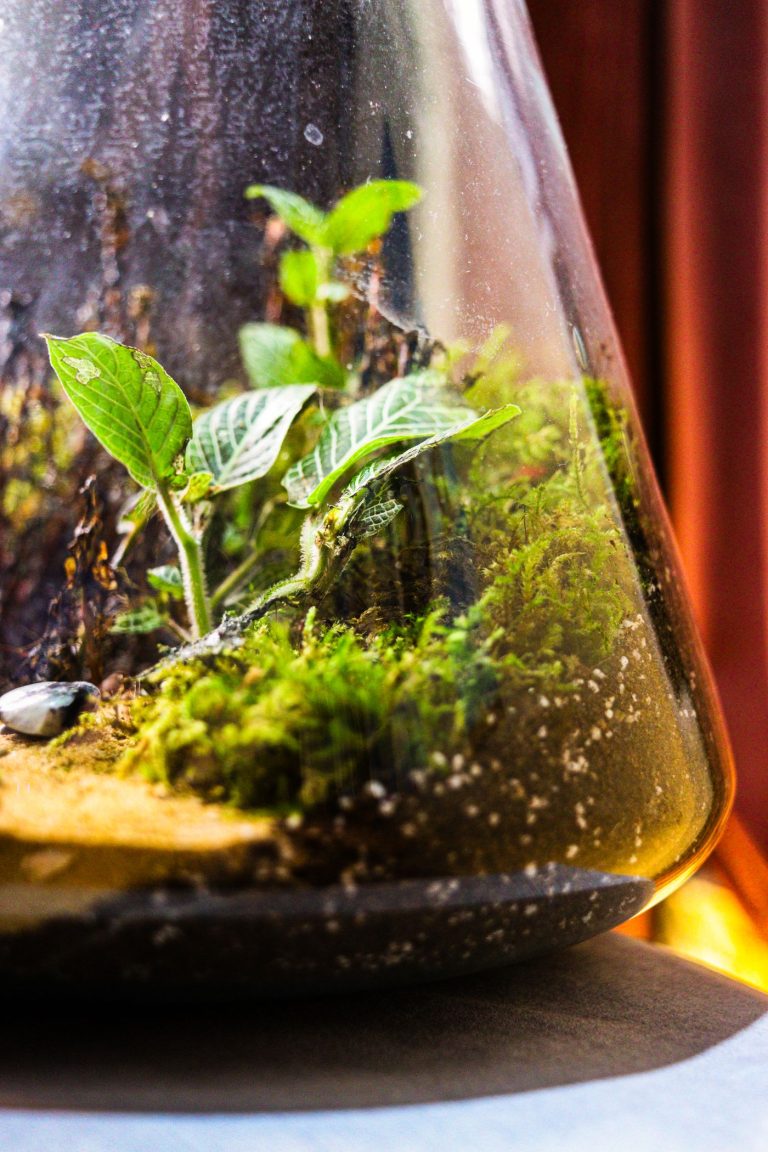
- Condensation. A closed terrarium should have light, shifting mist on the glass, clearing enough each day to see inside. Heavy fog that never lifts means too much water. Bone dry glass means too little.
- Colour. Foliage and moss should look green and firm. Yellowing, mushy, or leggy growth is worth a closer look.
- Cleanup crew. A few springtails moving across the soil or glass is a good sign the system is alive and working.
- Placement. Check nothing has changed around it, such as a radiator switched on for the season or stronger afternoon sun as the year turns.
If everything looks settled, close the lid and walk away. That is a good week.
The monthly tidy
Once a month, set aside ten minutes to keep growth in check and the glass clear. This is the routine that keeps a terrarium looking intentional rather than overgrown.
Prune and trim
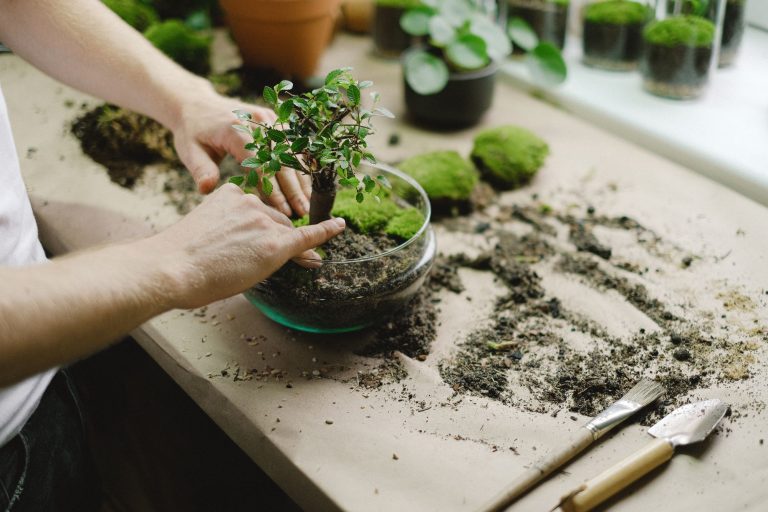
Plants in a warm, humid, sealed world grow enthusiastically. Trim back anything pressing hard against the glass, crowding a neighbour, or reaching for the lid. Remove yellowing leaves at the base, and pinch out the leading tips of trailing plants to keep them compact and bushy.
Work with clean, precise tools so you are not bruising stems or disturbing the substrate more than needed. A slim pair of scissors and long tweezers make close work in a narrow opening far easier, which is exactly what the pieces in The Maker’s Kit terrarium tool set are shaped for. Take out every trimming you cut, so nothing is left to rot where you cannot reach it.
Clear the glass
Over time a thin film of mineral spots or algae can build on the inside of the glass, softening the view. Wipe it gently with a clean cloth or a piece of paper towel wrapped around a long tool. Skip any soap or cleaning spray, as residue is harmful to the plants and the cleanup crew. Clear glass makes the whole planting look cared for.
Check the moisture
A closed terrarium rarely needs watering, sometimes only once or twice a year, because its water recycles. Only add moisture if the soil looks genuinely dry and the glass has stayed clear for several days. When you do, a few light mists are far safer than a pour.
A fine sprayer lets you add a small, even amount without flooding the base, which is why we keep The Mister glass plant sprayer close to hand. If you are ever unsure how wet is right, err on the side of less and let the glass tell you.
Looking after the cleanup crew
Springtails and isopods are the quiet engine of a bioactive terrarium, turning waste and mould into healthy soil. A settled crew usually looks after itself, but a little care keeps it strong.
- Leave a fallen leaf or two in place. It is food for the crew, and clearing every scrap can leave them short.
- If numbers look low after a while, a small piece of the crew from another established terrarium, or a fresh culture sourced from a local supplier, will top them up. Add gently and let them settle.
- Keep the soil lightly damp, never waterlogged. Both springtails and isopods need moisture but will struggle in standing water.
To understand how the crew earns its keep and what a healthy population looks like, see our fuller guide to springtails and isopods.
Adjusting through the seasons
A terrarium sits in a changing home, so the same spot behaves differently across the year. A few small tweaks keep it comfortable.
- Longer, brighter days. As spring and summer light strengthens, watch that a bright windowsill has not tipped into direct sun, which can scorch leaves and overheat the glass. Move it back from the pane if needed.
- Shorter, darker days. In winter, growth naturally slows and plants ask for less. Somewhere with steady, bright, indirect light keeps them ticking over.
- Heating and draughts. Radiators, wood burners, and cold draughty sills all swing the temperature. Keep the terrarium a little away from these so conditions stay even.
When to step in, and when to wait
Part of good care is restraint. A terrarium is a slow, living system, and it often settles on its own if you give it a few days. Reach for these gentle fixes only when something is genuinely off.
- Persistent heavy fog. Take the lid off for a few hours to let excess moisture escape, then close it again. Repeat over a few days until the glass clears daily.
- A patch of mould. A little is normal and the cleanup crew usually handles it. Only lift out a larger fuzzy patch, along with the leaf it is sitting on, if it is spreading faster than the crew can manage.
- Leggy, stretching growth. Plants reaching in one direction are asking for more even light. Turn the terrarium or move it somewhere brighter but still out of direct sun.
For a fuller walkthrough of the usual hiccups and how to read them, our terrarium troubleshooting guide covers mould, fog, and pests in detail. When in doubt, change one thing at a time and give it a week before deciding whether it worked.
A routine that keeps giving
Kept to a light monthly rhythm, a bioactive terrarium becomes one of the calmest things to own. A glance most weeks, a short tidy each month, and a small seasonal nudge are enough to keep it green and thriving for years. Tend it lightly, enjoy watching it grow, and reach for a tool only when it genuinely helps.